Curious how a simple barrier can protect a yard and create usable space while standing up to heavy soil and wet weather?
Anchored Construction & Restoration brings over 25 years of local experience to this topic. The team led by Knoxville native Travis Bullington blends practical knowledge with dependable craftsmanship across East Tennessee.
Their work covers design, materials selection, and construction for gravity and reinforced systems. A good wall controls drainage, cuts erosion, and turns slopes into usable space. Proper drainage details — like weep holes and French drains — extend service life and reduce pressure behind the wall.
Signs of trouble include bulging, leaning, cracking, and tilting. Proven fixes range from plate anchors to helical tiebacks. Costs and permits depend on height, site conditions, and whether engineering is required.
Key Takeaways
- Solid design and proper materials make walls last longer.
- Drainage matters as much as the facing units.
- Heights over four feet often need engineering and permits.
- Early signs of failure need prompt repair to cut costs.
- Anchored Construction & Restoration offers local, end‑to‑end help; call (865) 316-6933 or email Info@anchoredconstructiontn.com.
Retaining Walls at a Glance: Stability, Space, and Curb Appeal
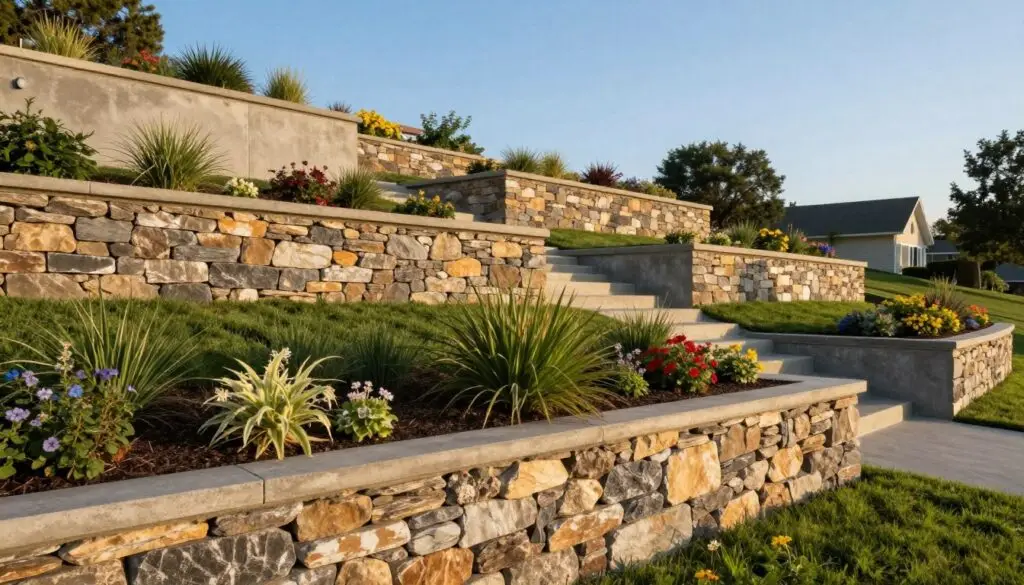
Steep yards gain safety and usable terraces when properly engineered barriers hold back shifting soil. Anchored Construction & Restoration turns grades into level patios, play areas, and garden rooms that boost curb appeal in Knoxville and East Tennessee.
Why sloped yards benefit
Slopes that are secured by sturdy walls reduce erosion and improve yard safety. Engineered drainage keeps water from building pressure behind segments during heavy rain.
How usable space improves
Creating terraces increases usable space without expanding the footprint. Thoughtful placement near driveways can improve traction and protect edges from washouts.
- Stabilize slopes with weight, reinforcement, and drainage for long‑term stability.
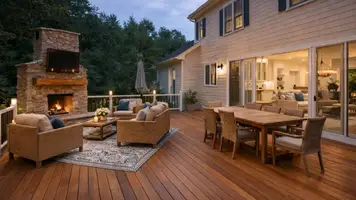
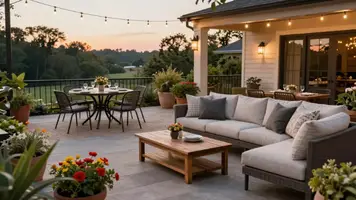
- Define outdoor rooms, add seating, and open a level area for gathering.
- Choose stone, block, or brick to match style and maintenance needs.
Anchored Construction helps homeowners align placement with how they want to live and entertain outside.
What Is a Retaining Wall
Anchored Construction explains the essentials so you can decide on the right approach for your property and budget. This section defines the core purpose, common materials, and why proper design matters for long service life.
Definition and core purposes
Definition: A retaining wall is a purpose-built structure that holds back soil to prevent soil erosion and shape outdoor space.
Primary uses include creating level areas for patios, parking, and gardens. These walls also manage drainage to keep water from building pressure behind the facing units.
Design essentials and materials
- Good design provides a path for water to escape using gravel backfill, perforated pipe, and weep holes.
- Common materials include concrete blocks, natural stone, brick, and timber; each material has trade‑offs in cost and care.
- Stability depends on a compacted base, correct thickness, slight backward lean, and reinforcement when needed.
- Taller projects or those supporting loads require engineering and permits to resist lateral soil pressure.
Anchored Construction & Restoration helps homeowners match materials and design to site conditions. With professional planning, the right wall becomes a functional feature that protects your yard and improves curb appeal.
How Retaining Walls Work: Soil Pressure, Structure, and Drainage
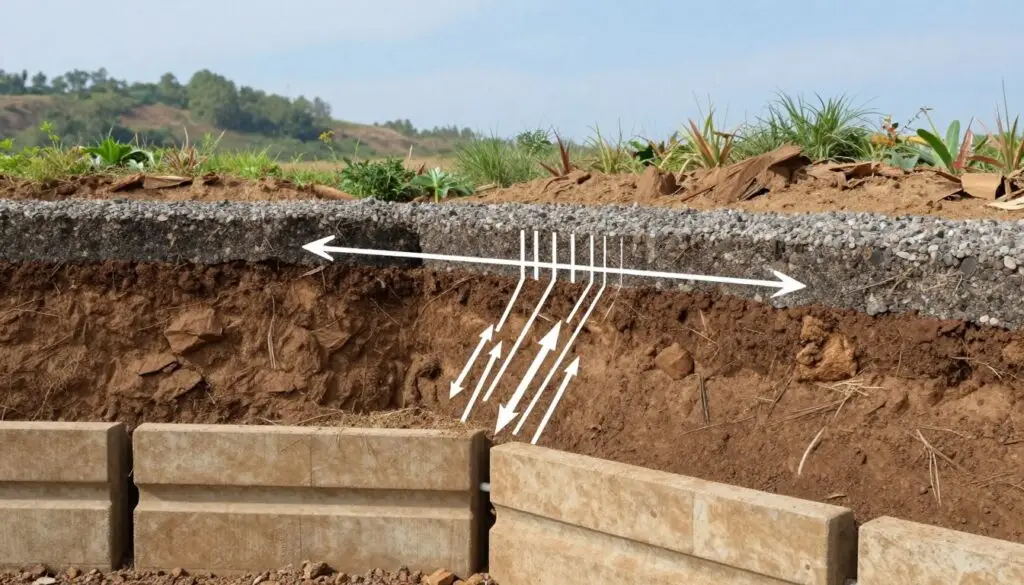
Good design begins with how lateral forces act on the wall. Lateral earth pressure grows with depth because weight from backfill increases vertical stress. The strongest horizontal push happens near the base, so foundations must resist the greatest loads.
Soil that moves slightly away reaches active pressure. If the wall shifts inward, passive resistance rises. Engineers check these conditions during design to ensure long‑term stability.
Hydrostatic control and drainage
Trapped water raises hydrostatic pressure quickly. Proper drainage prevents saturation by using weep holes, French drains, and free‑draining backfill. Surface runoff must be diverted so water does not enter the backfill.
Structural concepts
- Gravity systems rely on mass and weight to resist sliding and overturning.
- Reinforced concrete stems, anchors, and geogrids add strength where height or loads demand engineering.
- Keyed footings and compacted bases increase sliding resistance and bearing capacity.
Anchored Construction & Restoration applies these principles in East Tennessee to keep retaining walls durable and low‑maintenance under local weather and soil conditions.
Types of Retaining Walls for Different Needs and Sites
Site conditions dictate the best approach, from simple mass units to reinforced systems. This section outlines common types and when each fits a property.
Gravity systems
Gravity walls rely on weight to resist soil pressure. They often use stone, brick, or modular blocks for small height changes up to about three feet.
Cantilever systems
Cantilever designs use reinforced concrete with an inverted T or L footing. These transfer loads deep into the subgrade and suit taller projects with professional design.
Anchored and tensioned systems
Anchored solutions add tiebacks or soil anchors where space is tight or heights exceed base-width limits. They work well on constrained urban lots.
Gabion and permeable options
Gabion baskets filled with rock form permeable structures. They control erosion, reduce hydrostatic buildup, and perform well on slopes with drainage needs.
Reinforced soil systems
Mechanically stabilized earth uses geogrids to bind soil into a reinforced mass. This lowers foundation costs and speeds construction for taller projects.
- Choose by height, site access, and subsurface conditions.
- Material—concrete, blocks, stone—influences cost and upkeep.
- Proper engineering ensures the chosen system resists soil pressure long term.
Anchored Construction & Restoration evaluates needs, budget, and appearance to recommend the best options for East Tennessee homes.
Retaining Wall Materials and Design Choices
Selecting materials affects cost, maintenance, and how the structure handles soil and water. Anchored Construction helps homeowners weigh trade-offs so the finished work looks right and lasts.
Concrete blocks, natural stone, brick, and wood: Durability vs. appearance
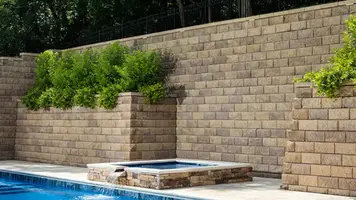
Concrete blocks deliver strength, uniform sizing, and many textures that fit modern and traditional homes. Interlocking options add stability for faster construction.
Natural stone brings character and blends with landscaping. Installation is skilled work due to irregular shapes and weight.
Brick offers a refined finish and pairs with classic architecture. It needs a solid base and careful drainage to avoid common failures.
Wood can be economical for lower heights but requires more maintenance and has shorter service life than masonry choices.
Wall design details: Thickness, base, batter, and control joints
Good wall design controls how loads travel into the subgrade. Thickness, base width, and batter resist lateral pressure from soil.
Control joints in cast concrete reduce cracking from thermal movement and shrinkage over time. Proper footing and compacted gravel are crucial for long service life.
Matching materials to site conditions, maintenance, and budget
- Concrete blocks suit many styles and offer predictable performance.
- Stone enhances curb appeal but raises labor costs and construction time.
- Brick gives a classic look with moderate upkeep; wood fits tight budgets for smaller projects.
Anchored Construction & Restoration reviews soil, groundwater, and frost depth to match materials to your site. Smart choices cut repairs and keep retaining walls performing through seasons.
Planning and Building a Retaining Wall: A Practical How‑To
Begin planning by mapping the slope, utilities, and access to set practical limits for construction. This first step avoids costly delays and protects underground lines.
Site evaluation starts with soil tests that confirm bearing capacity and groundwater depth. Locate property lines and equipment access so excavation proceeds safely.
Excavation and base require a level, compacted gravel pad. Place reinforced concrete footings where design or frost depth demands extra support.
Wall assembly follows manufacturer tolerances. Set courses, check alignment, and add geogrid layers to tie the block mass into the backfill.
Backfill and compaction use free‑draining granular soil in measured lifts. Compact each lift to reduce settlement and lower long‑term maintenance.
Drainage installation combines perforated pipe wrapped in fabric, gravel chimneys, and weep holes to move water away from the face. Finish grading and V‑ditches route runoff clear of the structure.
- Soil tests and permits first.
- Compact base, reinforced concrete footing as needed.
- Geogrid, proper backfill, and drainage complete the build.
Anchored Construction & Restoration coordinates testing, permits, and in‑house excavation to keep projects on schedule and on budget.
Drainage and Erosion Control Essentials Behind the Wall
Good drainage behind structures keeps hydrostatic forces from turning small problems into major failures. Trapped water raises pressure quickly. That pressure shortens service life and invites movement.
Preventing buildup and frost heave over time
Hydrostatic pressure ranks among the top causes of failure. Use weep holes, perforated pipe wrapped in fabric, and clean gravel backfill to give water a clear escape path.
French drains and free‑draining soil reduce saturation and limit freeze‑thaw damage. Footings set below frost depth help prevent heave that can lift courses out of alignment.
Surface grading, V‑ditches, and keeping runoff away
Direct surface runoff away from the face with swales, V‑ditches, and proper grading. If water never reaches the backfill, the risk of erosion and pressure falls sharply.
- Good drainage keeps water from collecting behind the wall and lowers lateral pressure on the structure.
- A perforated drain pipe with gravel creates a dependable path for subsurface flow.
- Weep holes relieve pore pressure at the face while vegetation and erosion fabric stabilize exposed soil.
- Regular inspections after heavy rain find clogs or settlement early, saving time and repair costs.
Anchored Construction & Restoration sizes drainage systems to local rainfall and groundwater conditions in East Tennessee. That attention to design helps retaining walls hold up season after season.
Common Retaining Wall Problems and Proven Repair Options
A leaning face or new cracks are signals that pressure behind the structure has changed.
Causes to check first. Bulging and leaning often point to saturated soil or a base that lacks width. Cracking can come from settlement, temperature shifts, or missing control joints. Tilting and sliding usually trace back to weak bearing soils or a missing footing key.
Stabilization methods that work
Initial steps include inspecting drainage, assessing backfill, and confirming alignment and batter. For modest repairs, plate anchors use steel plates and rods buried in compacted soil to transfer load away from failing faces.
When anchors or deeper fixes are needed
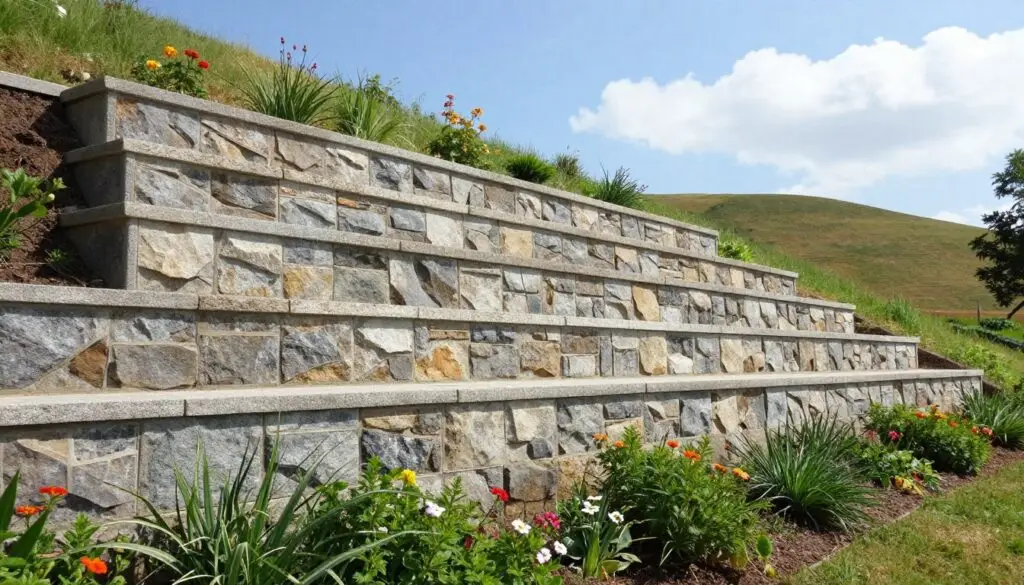
Helical tiebacks screw into stable ground to add deep tensile resistance for taller or limited‑access sites. Geogrid reinforcement and an improved base suit rebuilds. Terracing divides high drops into shorter runs to lower load on any single segment.
- Quick wins: clean drains, patch concrete cracks, seal to keep water out.
- Medium fixes: plate anchors or helical anchors to restore stability.
- Major repairs: partial dismantle, geogrid layers, new base and drainage.
Anchored Construction & Restoration inspects failing walls and offers clear repair plans, timelines, and cost estimates so homeowners can act with confidence and protect property value.
Costs, Timelines, and When to Hire a Pro in the United States
Knowing likely costs and expected timeframes helps you pick the best option for your yard.
Material and labor ranges
National projects generally range from about $3,202 to $9,203, with an average near $6,065. Materials run roughly $5–$200 per square foot depending on type and finish.
- Concrete: mid to high cost; durable and low maintenance.
- Modular block and stone: higher labor, strong curb appeal.
- Gabion options: cost varies with rock fill and access.
DIY versus professional installation
Short gravity installations on stable soil can be DIY to save $15–$50 per square foot. Walls over four feet usually need permits and engineering. Complex drainage, steep slopes, or shoreline jobs can raise labor by 50% or more.
Serving East Tennessee
Anchored Construction & Restoration brings 25+ years of local experience for design, construction, and repair. The team provides clear estimates, realistic schedules, and code‑compliant plans.
Call (865) 316-6933 or email Info@anchoredconstructiontn.com to schedule an on‑site assessment and compare options for your area.
Conclusion
Plan for lasting performance by combining smart design with routine inspection.
Well‑designed walls manage soil, water, and grade changes so your yard works better every day. Proper drainage and geogrid extend service life and limit costly repairs over time.
Material choices should match appearance, upkeep, and budget. Small issues caught early avoid major rebuilds. Repairs often restore function without full replacement.
Anchored Construction & Restoration, founded in 2000 by Travis Bullington, serves Knoxville and East Tennessee. The team evaluates site needs, explains options, and proposes clear timelines.
Ready to plan, build, or repair? Call (865) 316-6933 or email Info@anchoredconstructiontn.com for an on‑site assessment and a reliable plan.