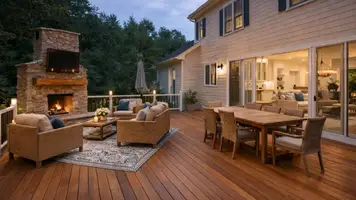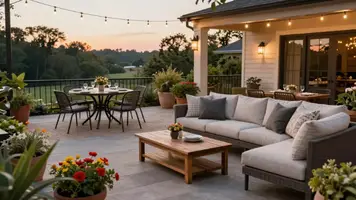
Could a smart plan for your backyard truly make your home feel larger and keep the indoor cooking area cleaner?
Anchored Construction & Restoration turns that idea into reality. Founded in 2000 and led by Knoxville native Travis Bullington, the team brings over 25 years of hands-on experience. They specialize in durable, code‑compliant solutions that suit East Tennessee weather.
This guide lays out a clear, step‑by‑step approach to planning, structural checks, materials, utilities, appliances, and upkeep. Readers get practical advice on layout, safety, and correct load calculations to protect both the deck and the home.
Expect personalized designs that match your lifestyle, budget, and existing space. Early consultation helps align permits, inspections, and scheduling so projects finish on time and on budget. To start a conversation, call (865) 316-6933 or email Info@anchoredconstructiontn.com.
Key Takeaways
- Well‑planned setups increase property value and expand living space.
- Anchored Construction offers local Knoxville expertise and 25+ years of experience.
- Designs focus on safety, non‑combustible materials, and correct load calculations.
- Projects are customized—no one‑size‑fits‑all solutions.
- Call (865) 316-6933 or email Info@anchoredconstructiontn.com to begin planning.
Why a Deck with Outdoor Kitchen Elevates Your Living Space
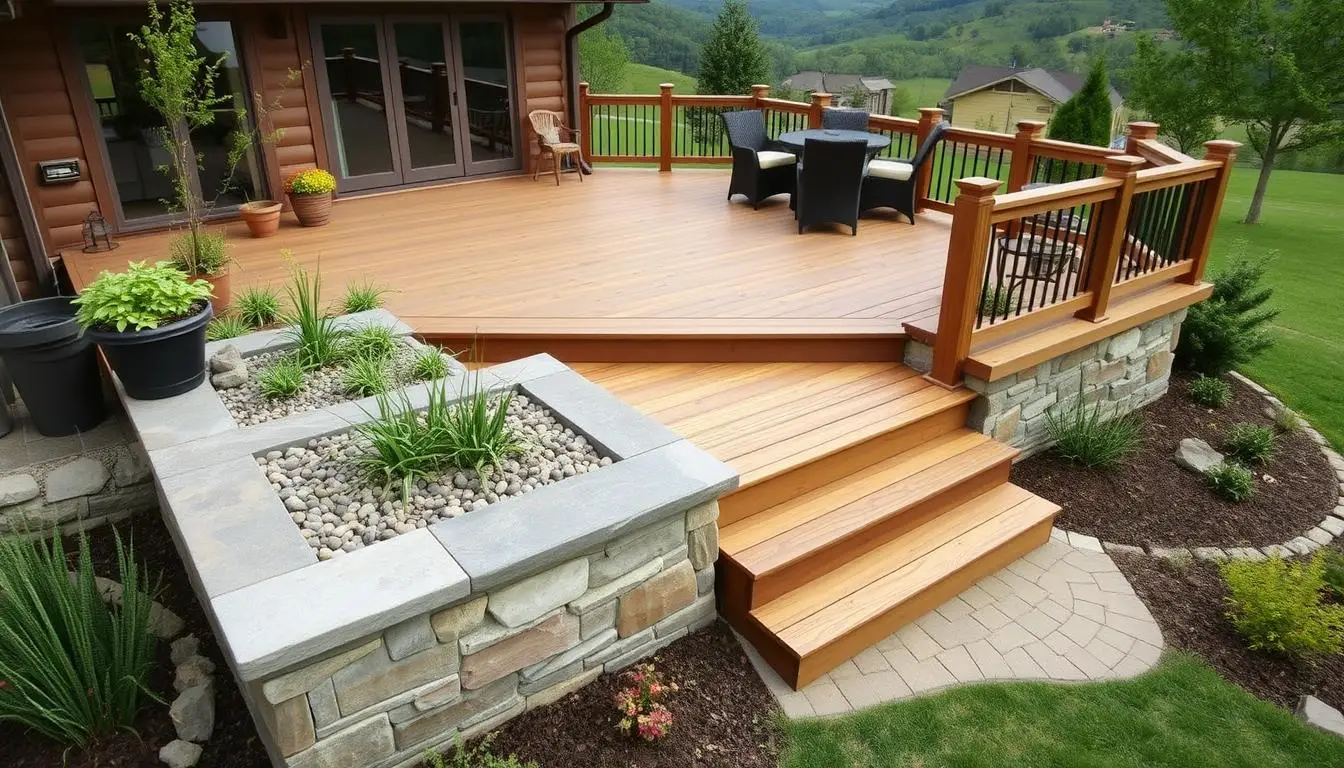
A well-planned exterior cooking area can expand how your home functions and make hosting simpler. It creates a smooth flow between indoor and outdoor zones. Guests move easily from the dining room to a prepared meal outside.
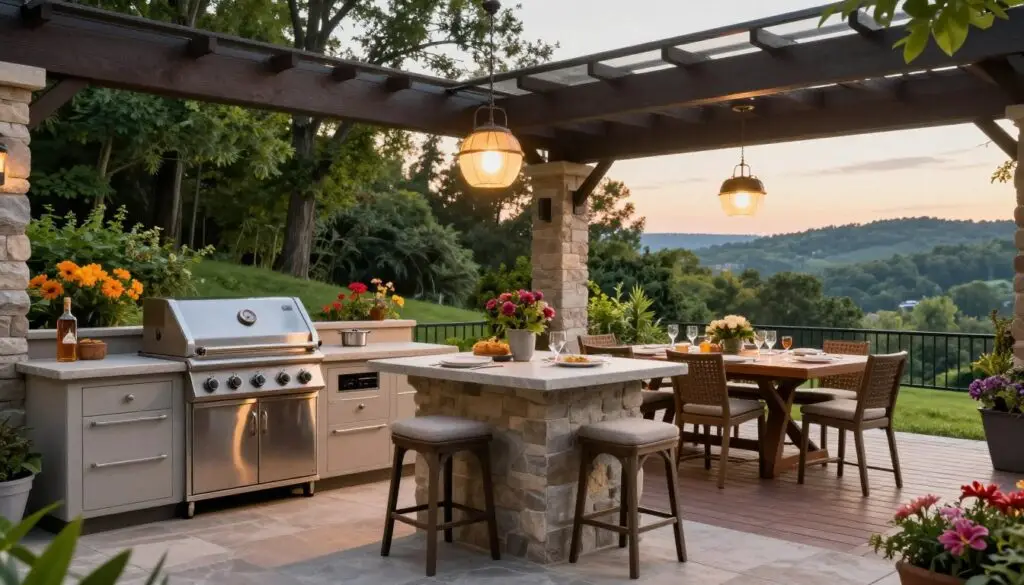
Practical benefits: Less mess inside. Fewer trips carrying plates. A larger-feel living space that suits everyday meals and weekend gatherings.
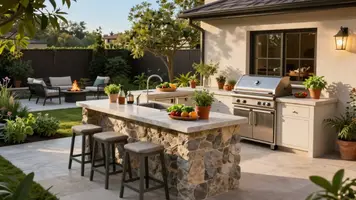
Design ideas range from a compact grilling station to a full prep-and-serve layout with zones for prep, cooking, and serving. Proper safety is essential. Follow clearances for grills, pick non-combustible surfaces, and plan appliance locations early.
- Seamless flow: connect indoor routes for easy access.
- Step-by-step: assess platform load, choose appliances, and select finishes.
- Cost control: place utilities near existing runs to shorten plumbing and gas lines.
- Knoxville-ready: consider weather exposure, seasonal care, and durable materials.
Anchored Construction turns goals into a safe, organized plan that matches how you cook today. Even small upgrades—better lighting or a compact sink—can improve daily cooking and entertaining.
Plan First: How to Align Layout, Style, and Use
Start by mapping how people will move and work in the cooking area before choosing appliances or finishes. Anchored Construction plans zones and traffic flow carefully so the outdoor kitchen supports how you prep, cook, and serve. Early planning reduces congestion and keeps costs in check.
Zones that work
Define clear zones: cooking, prep, serving, a small bar, and dining. Each zone should sit on a scaled layout that matches the existing deck and house access. That keeps guests and cooks from crowding one another.
Workflow like indoors
Adapt the indoor work triangle outdoors. Place the grill, prep counter, and sink in efficient proximity. Maintain safe clearances and good ventilation. This improves flow and cuts unnecessary steps back to the indoor kitchen.
Shelter and style
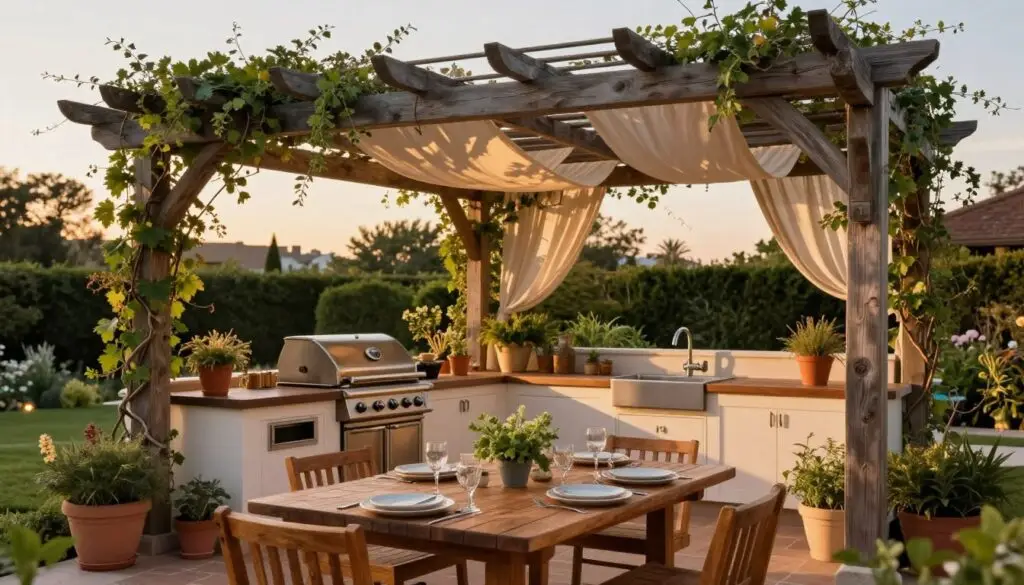
Choose a complementary style—rustic, modern, or transitional. Add shelter such as a pergola or a louvered roof for shade and rain protection. Plan lighting layers for task and ambient use so the space works after dark.
- Right-size islands and counters for multiple users.
- Position landing zones near hot appliances for safety.
- Account for wind, sun angles, and storage needs.
- Use durable finishes that match existing materials.
- Document utility and support locations for smooth construction.
Structural Reality Check: Weight, Load, and Foundations
Before choosing heavy finishes, confirm the platform can safely bear the added weight. A simple check prevents damage and keeps people safe.
Dead load is the structure itself. Live load includes appliances, counters, furniture, planters, and people. Use the 50 psf rule as a planning baseline: dead load plus live load ≈ 50 pounds per square foot.
Quick example
A 100 sq ft platform rated at 50 psf supports about 5,000 lbs total. Compare that number to combined weights of thick stone counters, masonry cladding, large appliances, and a pizza oven before finalizing finishes.
Heavy elements to watch
- Masonry and thick stone tops add large point loads.
- Commercial appliances concentrate weight in small areas.
- Pizza ovens and planters can quickly exceed capacity.
Stronger support options
Anchored Construction evaluates framing and may recommend added beams, upgraded footings, or helical piles. Helical piles are steel screw piles set to torque and depth by certified installers. They improve bearing and limit movement in varied soils.
When to call a pro
Inspect wood framing, ledger connections, and post fastenings before installing heavy features. If calculations are close or heavy elements are planned, consult an engineer or experienced contractor. Anchored Construction handles assessment and coordinates reinforcements so installations proceed on schedule and safely.
Materials That Last: Non‑Combustible, Weather‑Ready, Knoxville‑Tough
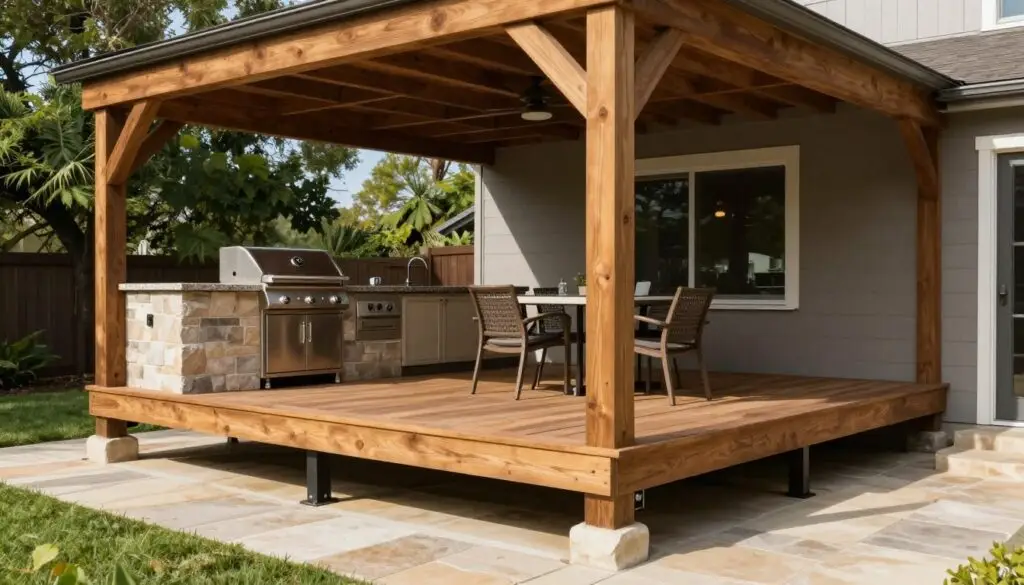
Choose materials that stand up to Tennessee sun, rain, and seasonal swings to protect long‑term value. Anchored Construction specifies durable, low‑maintenance finishes that match budgets and local conditions.
Cabinetry and cladding choices
Prioritize non‑combustible cabinetry and cladding such as concrete, brick, and stone to limit fire spread and resist moisture. Stainless steel doors, drawers, and hardware resist corrosion and clean easily in an exposed setting.
Decking realities near heat
Both wood and composite decking react to heat from grills. Maintain proper clearances. Add heat shields, non‑combustible pads, and manufacturer‑specified barriers to protect surfaces and framing.
Countertops that handle weather and heat
Select countertops like concrete, granite, or dense stone. Seal edges and verify support to prevent cracking or staining. Use UV‑stable finishes and correct fasteners to avoid corrosion and fading.
- Limit fire risk with masonry cladding and concrete bases.
- Choose stainless steel components for long life and easy care.
- Plan water management: drip edges, flashing, sealed penetrations.
- Balance appearance and performance to match the home.
- Confirm clearance and installation details to keep warranties valid.
Utilities Done Right: Gas, Water, and Electric for Outdoor Kitchens
Planning gas, water, and power early makes installation smoother and speeds inspections. Anchored Construction coordinates licensed trades and schedules inspections to keep work code‑compliant and serviceable.
Gas lines
Natural gas or propane must be fitted by qualified pros. Compare hookup needs, shutoffs, and pressure regulators sized to appliance demand. Place service panels and vented access doors so valves are reachable for service.
Water and waste
Bury supply lines below frost depth when routed underground and insulate any exposed runs. Use potable‑grade plumbing and plan drains or recirculating solutions when full plumbing is impractical on an elevated area.
Electric
Specify GFCI protection and dedicated circuits for fridges, ice makers, and lighting. Confirm appliance amperage early so conduit paths and breakers are placed correctly. Label breakers and shutoffs for quick seasonal startup.
- Coordinate penetrations with flashing and gaskets to prevent moisture intrusion.
- Sequence rough‑ins before cabinets and counters to avoid rework.
- Document as‑built routes and verify all inspections pass local codes.
Appliances and Features: Build the Ultimate Grill Station
Selecting the right grill and support features makes the whole cooking area work better. Anchored Construction sources and installs weather-rated appliances and sealed cabinetry to create a complete, serviceable space.
Grills and heat choices
Compare a gas grill for steady heat and quick startup to a charcoal unit for higher sear and smoky flavor. Gas models need qualified hookups. Charcoal runs hotter but produces ash and more cleanup.
Key appliance add-ons
Look for full stainless steel construction in frames and fireboxes for durability and low maintenance. Consider a power burner for big pots, a pizza oven for high-heat baking, and refrigeration to keep food and drinks cold.
Storage, sinks, and service
Include a sink for fast cleanup and sealed cabinetry to protect tools and paper goods. Plan a compact bar area with ice storage and garnish trays for efficient serving. Verify clearances, ventilation, and anchor points before counters are built.
- Pick your primary grill by cooking style and BTU needs.
- Balance BTUs with heat distribution, not just top numbers.
- Group prep, hot, and cold zones to shorten steps.
- Confirm appliance cutouts and anchoring before countertop fabrication.
Main Steps to Design a deck with outdoor kitchen
Start the project by walking the site and noting clearances, sun, and prevailing wind so design decisions solve real conditions. This first step avoids surprises and guides safe placement near the home.
Site assessment: Confirm clearances from railings and siding. Check wind patterns and how the area ties to the indoor kitchen for convenience. Measure access and staging zones for installers.
Layout and load plan
Create a scaled layout that balances prep, cooking, and serving. Document framing, spans, and connections to inform load calculations.
Prepare a load plan that factors in appliance weight, countertop materials, and the number of users. Reinforce structure before adding heavy finishes.
Utility plan
Map gas, water, drain, and electrical routes. Stub utilities through or under the decking where safe and serviceable. Include access panels for future repairs.
Permits, inspections, and scheduling
Coordinate permits early and schedule gas and electrical inspections. Sequence the build: structure and reinforcement first, then utilities, then cabinets and appliances, and finally countertops and finishes.
- Protect decking during construction with temporary coverings.
- Track lead times for appliances to avoid delays.
- Close with a punch list and homeowner orientation for safe operation and seasonal care.
Anchored Construction manages the full process—site review, design, engineering, utilities, permits, and construction—to deliver a smooth, on‑time result.
Safety, Covers, and Long‑Term Care
Start each season by checking clearances, connections, and covers to avoid surprises. Anchored Construction & Restoration helps homeowners plan for safe operation and long life of appliances and surfaces. This short guide highlights key safety elements and routine care to reduce risk and save time.
Fire safety and heat management
Keep grills several feet from the house and away from railings and overhanging branches. Clean cooking surfaces and grease trays often; neglected grease is a common cause of fires.
Covers, shelter, and protection
Add a partial roof, pergola, or appliance covers to shield equipment from rain and sun. Use non‑combustible pads and heat shields under and behind hot appliances when placed near the deck surface.
Seasonal maintenance and inspections
- Inspect gas connections, GFCIs, and water shutoffs each season; repair worn hoses.
- Reseal stone and concrete tops per manufacturer guidance to resist stains and freeze cycles.
- Sweep the deck free of leaves and debris before use and avoid storing combustibles underneath.
- Check fasteners, railings, and flashing annually to protect structure and safety.
Make sure a fire extinguisher is nearby and review safe‑start steps with anyone who uses the outdoor kitchen. Small actions now keep people and property safe over time.
Partner with Anchored Construction in Knoxville
Choose a local partner who understands Knoxville soils, seasons, and code requirements to avoid costly surprises.
Anchored Construction & Restoration was founded in 2000 by Knoxville native Travis Bullington. The team brings over 25 years of experience across deck and outdoor kitchen projects, hardscapes, masonry, metals, and excavation services.
Local expertise since 2000
They deliver durable solutions tailored to East Tennessee weather. Engineers and licensed trades are coordinated for safe, code‑compliant work.
From concept to completion
Design, materials, structural upgrades, utilities, and final installation are managed end to end. Craftsmanship in carpentry, concrete, and metalwork creates cohesive results.
Contact Anchored Construction
Make sure schedules, budgets, and warranties are clear before construction starts. Call (865) 316-6933 or email Info@anchoredconstructiontn.com to schedule a consultation and turn ideas into a lasting backyard bar or cooking area.
Conclusion
Turn ideas into a lasting, usable space by starting with a clear design that matches how you cook and entertain.
Verify platform load and weight distribution before you choose heavy stone or thick countertops. This protects structure and people.
Pick durable, non‑combustible materials and add protective details for rain and sun. Plan safe utilities: proper gas hookups, water routing, and GFCI‑protected circuits with accessible service panels.
Organize appliances into a functional grill station. Consider gas grills, charcoal options, a pizza oven, and refrigeration so the area works for every meal.
Keep up seasonal maintenance—clean grills, reseal tops, and inspect fasteners—to extend service life. For expert design and build, call Anchored Construction & Restoration at (865) 316-6933 or email Info@anchoredconstructiontn.com. They bring more than 25 years of experience to help you enjoy your backyard for years to come.