Which surface will give your patio the best mix of beauty, durability, and ease of repair?
This guide gives a fair, side-by-side look at two popular options. It helps homeowners in Knoxville and East Tennessee decide what fits their yard and budget.
Anchored Construction & Restoration brings over 25 years of experience led by Knoxville native Travis Bullington. The team handles deck building, concrete services, landscape work, outdoor kitchens, hardscapes, and excavation to turn ideas into outdoor spaces you love.
Both interlocking units and poured slabs can look great. Costs and timing differ. For example, installed price ranges and when you can walk or drive matter to planning.
This article previews performance, maintenance, and repair realities. It also flags site and climate details unique to the area so you can make a smart choice for your home and property.
Key Takeaways
- Expect overlapping cost ranges but different long-term repair patterns.
- Pavers often allow quick unit replacement; poured slabs need different repair methods.
- Timing matters: some surfaces accept traffic sooner than others.
- Proper site prep and periodic sealing preserve color and performance.
- Anchored Construction & Restoration offers one accountable team from design to completion. Call (865) 316-6933 or Info@anchoredconstructiontn.com.
What homeowners mean by concrete pavers and stamped concrete today
Understanding how each surface is built makes the choice easier. Anchored Construction explains methods plainly so you can match the right surface to how you live.
How each surface is built
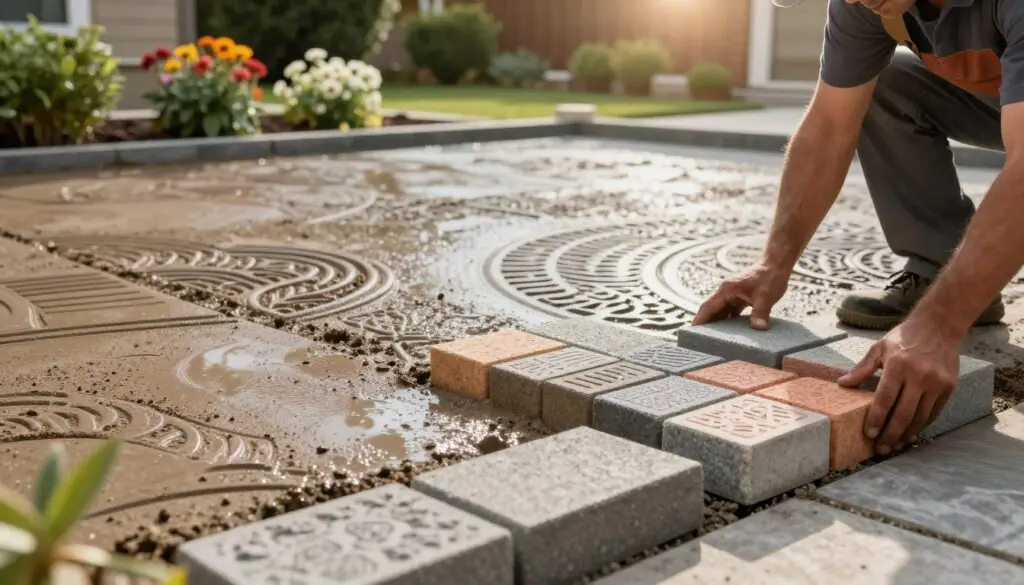
Pavers are modular, interlocking units set over a compacted base with a thin bedding sand layer. Joint sand locks the units and controls movement.
Stamped concrete is poured in place, finished, then imprinted with patterns or texture skins while the slab is workable. Color can be integral, applied powders, or stains.
Where each shines outdoors
Both need a well-graded subgrade. Problems start when the base is weak.
- Patios and walkways benefit from either option depending on look and maintenance.
- Driveways and pool decks require load and splash considerations when specifying materials.
- Pavers offer clear unit edges like brick or stone; stamped slabs give seamless, continuous patterns.
Bottom line: project goals, site conditions, and daily use decide the best choice. Anchored Construction helps align selection, installation timing, and maintenance expectations.
Concrete pavers vs stamped concrete: cost, time, and labor
Knowing what drives cost and how long work takes helps you plan with confidence.
Installed price per square foot ranges and what drives costs
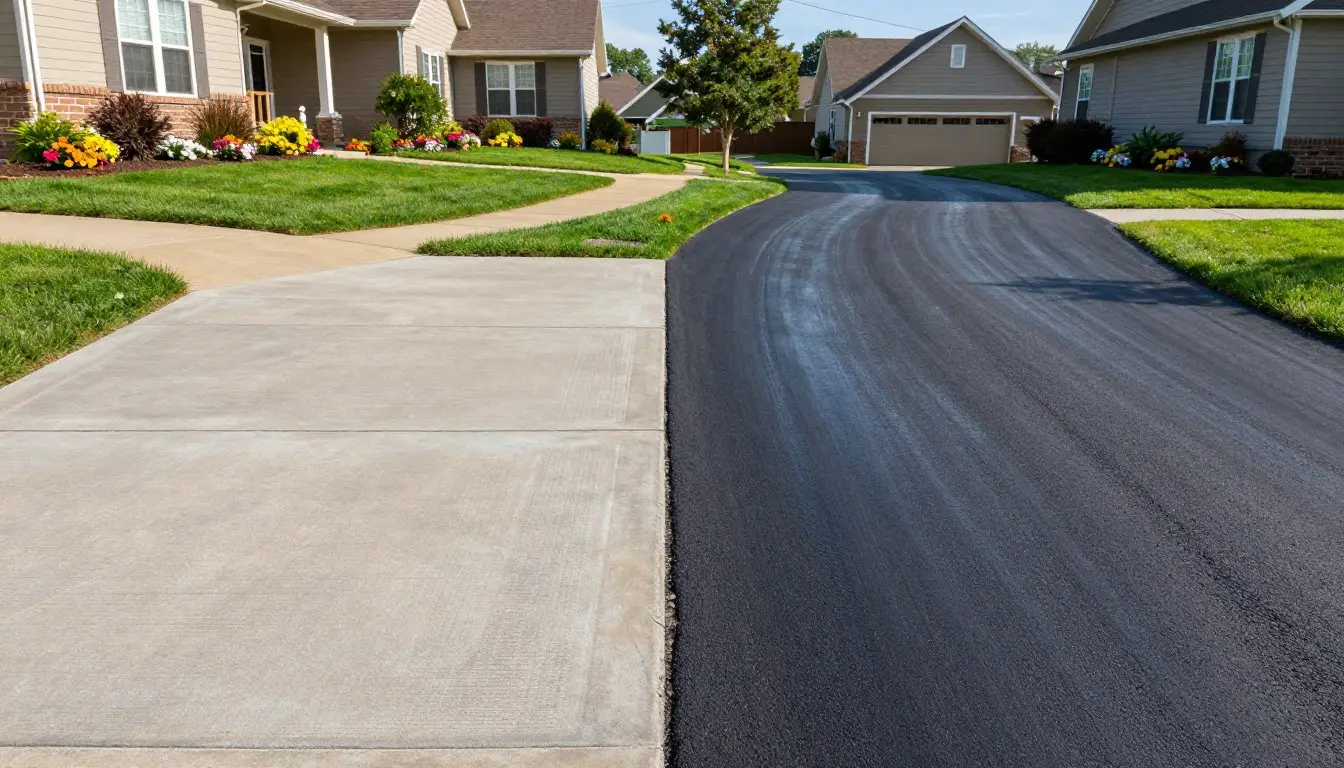
Installed price often overlaps. Basic stamped concrete starts around $8–$12 per square foot and can reach $18 for complex patterns. Concrete pavers may run up to $20 per square foot depending on material and detail.
Installation timelines, curing, and when you can use the surface
Labor is the main driver for concrete pavers because each unit is hand-set and the base is carefully prepared. For stamped concrete, forming, finishing, and curing take most of the labor time.
Stamped concrete needs about 24 hours before foot traffic and roughly seven days before vehicles. Concrete pavers can be used immediately after installation when joint sand is set.
Short-term price vs long-term value and repair savings
- Simpler borders and fewer colors lower costs for either option.
- Proper base compaction reduces callbacks and future costs.
- Concrete pavers allow targeted repairs years down the road without obvious patching.
- Stamped concrete can save money up front but may need more visible patch work later.
Anchored Construction provides transparent estimates and sequences work to minimize disruption. Call (865) 316-6933 or email Info@anchoredconstructiontn.com to discuss scope, budget, and schedule.
Design, colors, textures, and patterns that match your home
Good surface design ties the patio to the house and the landscape. Anchored Construction’s design team helps you select patterns, borders, and palettes drawn from 25+ years of regional experience.
Paver options: shapes, sizes, borders, and stone- or brick-like looks
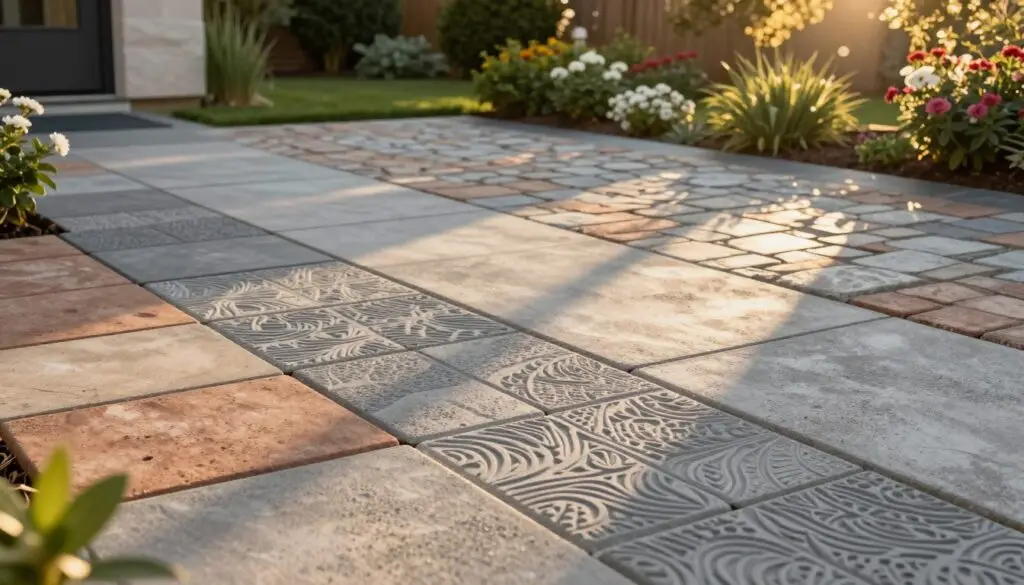
Paver choices include modular shapes and sizes that echo brick or cut-stone. Running bonds and mixed-size fields create traditional lines that complement a home’s architecture.
Borders and soldier courses frame the area and guide water away from seating zones. Crisp joints give a neat natural stone look while allowing targeted repairs later.
Surface options: texture skins, wood and random stone patterns, custom color
Stamped concrete uses texture skins and pattern mats to mimic random stone or wood planks. Color comes from integral mixes, color hardeners, or stains to add depth and variation.
- Match paver shapes and running bonds to your home’s scale and rooflines.
- Use a contrasting border for visual interest without adding square footage cost.
- Pick color systems for long-term tone—integral, hardener, or stain affect variation.
- Combine materials: a seamless field with a paver border balances budget and style.
- Confirm choices with sample boards and on-site mockups before installation.
Durability, maintenance, and repairs over the years
Durability and routine care determine whether a patio stays attractive through the seasons. Anchored Construction sets clear maintenance expectations so homeowners in Knoxville know what to plan.
Sealing, joint sand, polymeric sand, and cleaning
Both surfaces benefit from periodic cleaning and sealing. Aim to seal most fields every 3–5 years to slow wear and ease stain removal.
Joint care matters for longevity. Refill joint sand every 2–3 years or use polymeric sand to limit weeds and washout.
Cracks, shifting, and how repairs look and cost
Slab areas can develop cracks from freeze/thaw, roots, or subbase movement. Repairs are possible but may not match color and texture perfectly.
Pavers allow targeted repairs. Units lift and reset when settlement or a utility cut occurs, avoiding obvious patchwork.
- Wash surfaces seasonally and spot-clean spills early to prevent lasting damage.
- Use gentle de-icers in East Tennessee; harsh salts accelerate surface wear.
- Quality installation—compaction, edge restraint, and drainage—prevents most shifting and early repairs.
Simple seasonal maintenance keeps patios looking like natural stone and extends service life with minimal effort.
Climate and site conditions: freeze-thaw, drainage, and safety
Site slope, soil movement, and seasonal storms drive smart choices for any outdoor surface.
Freeze-thaw cycles shift soils. A well-compacted, graded subgrade and robust drainage are non-negotiable for long-term performance. Without them, movement leads to uneven areas and costly repairs.
Edge restraints and base depth stop lateral movement on slopes. Proper installation keeps a busy patio stable and reduces the risk of units or slab edges failing during storms.
- Pavers accommodate minor seasonal movement and reopen to foot traffic immediately after installation, reducing disruption.
- Stamped concrete needs curing time before foot and vehicle use; subbase movement can cause visible cracking.
- Choose permeable materials when runoff control, foundation protection, and less puddling are priorities.
Finish texture, joint profile, and lighter color choices improve slip resistance and lower heat gain. Thoughtful detailing and quality installation often deliver the best value by cutting future maintenance and repair costs.
Anchored Construction’s guidance for your project in Knoxville and East Tennessee
Anchored Construction helps homeowners turn an outdoor idea into a practical, lasting project. Founded in 2000 and led by Knoxville native Travis Bullington, the team brings over 25 years of experience.
Patio and hardscape expertise: concrete services, pavers, retaining walls, outdoor kitchens
The company builds patios, retaining walls, outdoor kitchens, and full landscape scopes for homes and businesses. Teams handle deck work, warehouse repair, bobcat and excavation, and site grading.
From design to excavation and installation: one team, 25+ years of experience
Anchored Construction offers a clear process from consultation to final walkthrough. They advise on curing windows for stamped concrete and the immediate-use benefits of concrete pavers.
- Site prep: in-house excavation and grading to set stable bases for both materials.
- Design coordination: color selections, borders, and lighting to match your home.
- Maintenance guidance: sealing and joint care schedules to protect appearance and traction.
Call Anchored Construction at (865) 316-6933 or email Info@anchoredconstructiontn.com
Discuss options, the best choice for your yard, and a realistic timeline for installation. The team supports homeowners across East Tennessee with one accountable contractor from design through completion.
Conclusion
A clear plan for design, upkeep, and budget helps you lock in the right choice for your outdoor space.
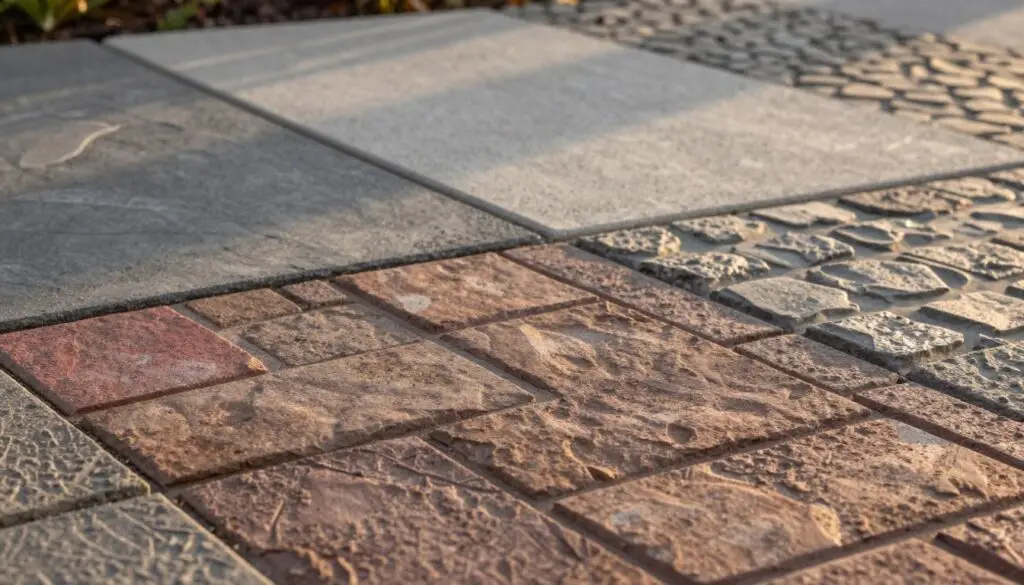
Both options can deliver a convincing natural stone look with varied patterns, textures, and colors to match your home and landscape. The main advantages are immediate use and modular repairs with pavers, and broad pattern and color flexibility with poured slabs.
Expect overlapping price per square foot based on pattern complexity, access, borders, and site prep. Slab curing time matters; routine maintenance and sealing protect finishes and limit visible cracks or damage. Modular units allow targeted replacement that avoids patchwork.
For a confident choice and a detailed estimate, call Anchored Construction & Restoration at (865) 316-6933 or email Info@anchoredconstructiontn.com. Get a clear cost, schedule, and protection plan before your patio project begins.