Which option delivers the best look and value for your Knoxville patio: stamped concrete or pavers?
Anchored Construction & Restoration has served East Tennessee for over 25 years. The team helps homeowners plan every outdoor project. They combine local know-how with practical design advice.
This introduction outlines the key tradeoffs in a simple way. It highlights cost, installation time, and how each surface ages in local weather.
Expect clear explanations about how base preparation, color, and texture affect the final look. Readers will learn when one option suits a driveway versus a patio or walkway.
For questions or to start a quote, call (865) 316-6933 or email Info@anchoredconstructiontn.com. Anchored coordinates grading, drainage, and related work so your plan fits Knoxville soils and freeze-thaw conditions.
Key Takeaways
- Anchored offers 25+ years of local experience for outdoor living upgrades.
- Compare cost, installation time, and long-term maintenance to choose the best option.
- Design flexibility includes color and textures that mimic natural stone and brick.
- Site preparation and drainage affect durability more than style alone.
- Anchored can provide measurements, design concepts, and full project coordination.
Anchored Construction’s local expertise for patios, driveways, and outdoor living
Anchored Construction combines hands-on experience and local insight to build outdoor spaces that last through Tennessee seasons. Led by Knoxville native Travis Bullington, the team brings 25+ years of work in patios, driveway installs, decks, landscape services, and more.
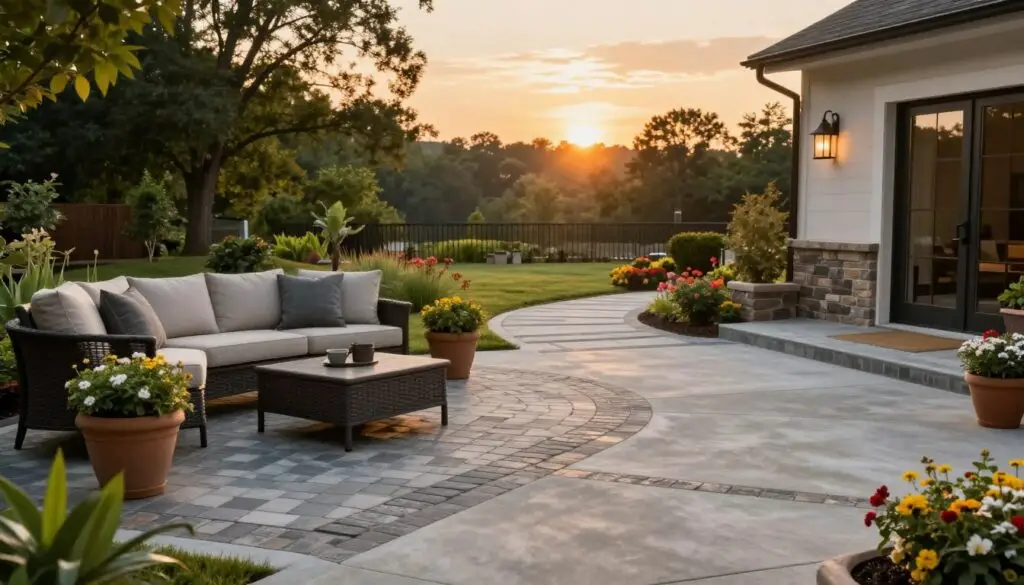
Processes that protect your investment: Both poured surfaces and individual units depend on a well-compacted, graded subgrade. That common foundation sets the stage for durable results no matter which materials you choose.
- Site evaluation, drainage, and base prep to keep patios and driveway areas performing well.
- Material guidance so you understand how different options respond over the years.
- Coordinated installation for seating walls, outdoor kitchens, steps, and utility rough-ins.
- Staging and access management to limit disruption during installation.
- One accountable partner from plan to final walkthrough.
Placement of individual units extends installation time, while poured surfaces go down faster but need cure time. Call (865) 316-6933 or email Info@anchoredconstructiontn.com to schedule a site review.
Cost comparison: stamped concrete vs pavers for Knoxville projects
Comparing installed price per square foot clarifies budget choices for a patio. Anchored evaluates site access, slope, and materials so estimates match site conditions.
Upfront installation price per square foot and why labor drives costs
Basic stamped concrete runs roughly $8–$12 per square foot, with ornate designs up to $18. Paver installations vary more due to labor and can range widely. Labor matters because each unit is hand-set over a compacted base.
Managing budget: mixing stamped and plain concrete fields
Value engineering often pairs plain poured fields with decorative borders. That approach lowers price while keeping a stone-like look where it counts.
Long-term costs: repairs, replacements, and maintenance over the years
- Expect routine sealing for poured surfaces and joint sand upkeep for pavers.
- Paver repairs are localized; individual units lift and reset if damage occurs.
- Larger slab cracks can be more visible and may require patching or replacement.
Anchored provides itemized per square estimates and alternates to fit your budget. For a local quote, call (865) 316-6933 or email Info@anchoredconstructiontn.com.
Installation and project timelines: what homeowners should expect
A clear project timeline helps homeowners plan daily life during an outdoor surface installation. Anchored coordinates scheduling to limit downtime and shares daily milestones so you know what to expect.
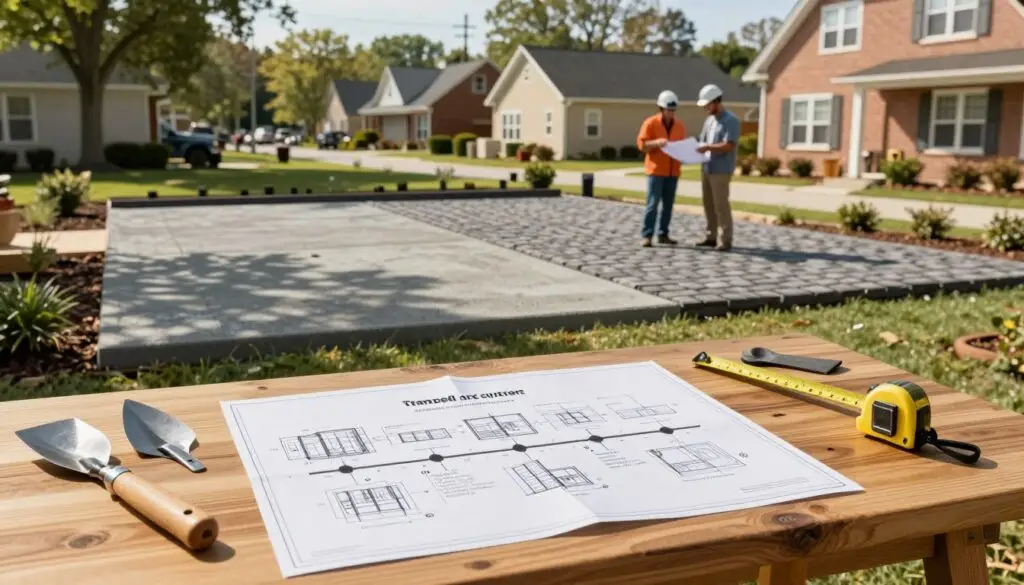
Foundation prep is the same for both systems: crews excavate to design depth, compact the subgrade, and set a base that manages drainage and load. Proper base work protects the finished surface and extends lifespan.
Why placing units takes longer
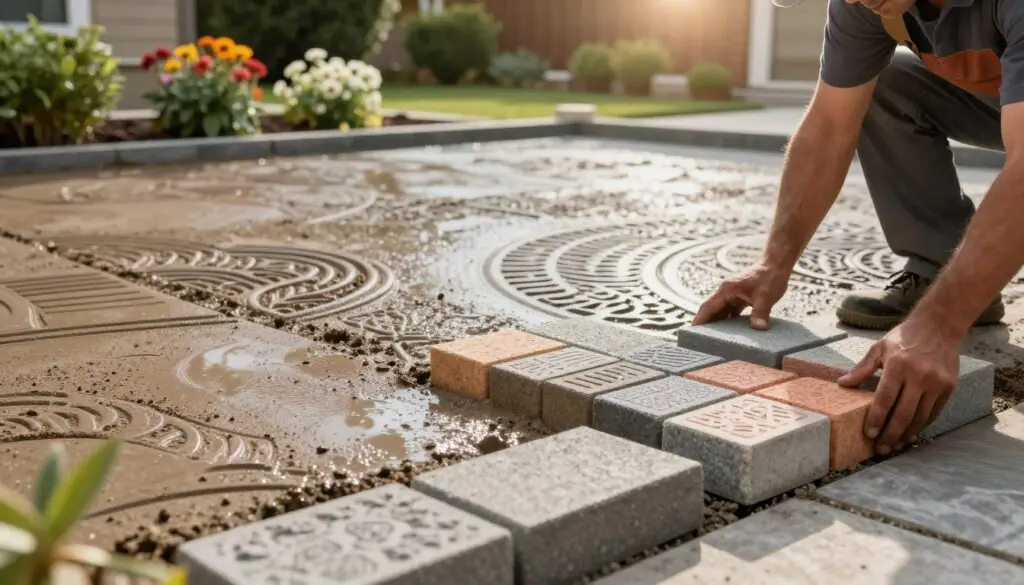
Setting individual units adds time because each piece is laid, cut, edged, and compacted. For large driveways, crews often work multiple days to keep patterns accurate and edges secure.
Traffic-ready timing
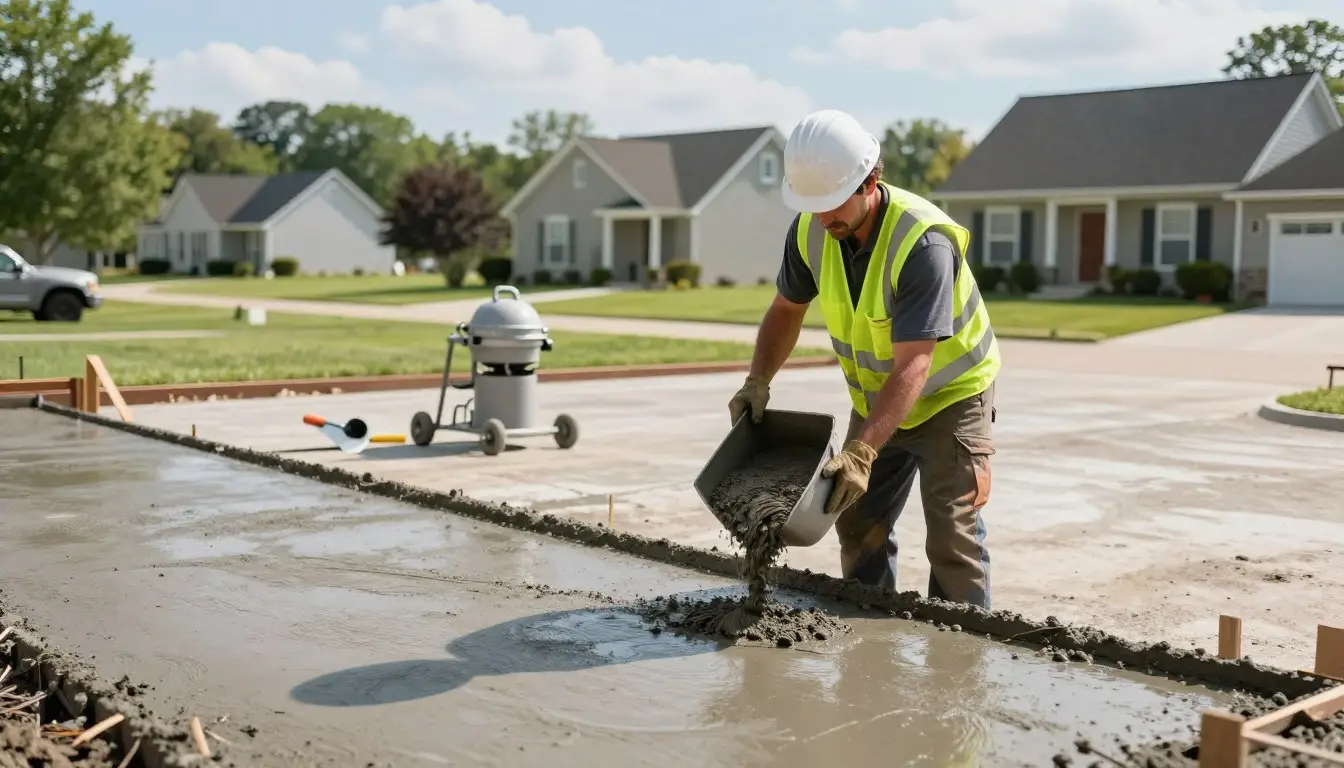
Paved areas made from individual units can often handle foot and vehicle traffic immediately after installation. Poured slabs need curing time. Expect at least 24 hours before foot traffic and roughly seven days before vehicles on a driveway.
- Weather affects time: hot, cold, or wet conditions change finishing and curing windows.
- Labor needs rise with curves, steps, and custom layouts; Anchored will outline those impacts.
- Final tasks include joint sand tamping for concrete pavers and a sealing schedule for stamped concrete surfaces.
Anchored stages work to keep essential access open when possible. The team provides clear aftercare guidance so your new surface performs well from day one.
Design and curb appeal: patterns, colors, and textures that fit your home
Good design ties materials and landscaping to the home’s style for lasting curb appeal. Anchored’s designers help you coordinate finishes across the backyard so the patio field, borders, and an outdoor kitchen feel unified.
Pavers offer modular shapes, sizes, and stone-like looks
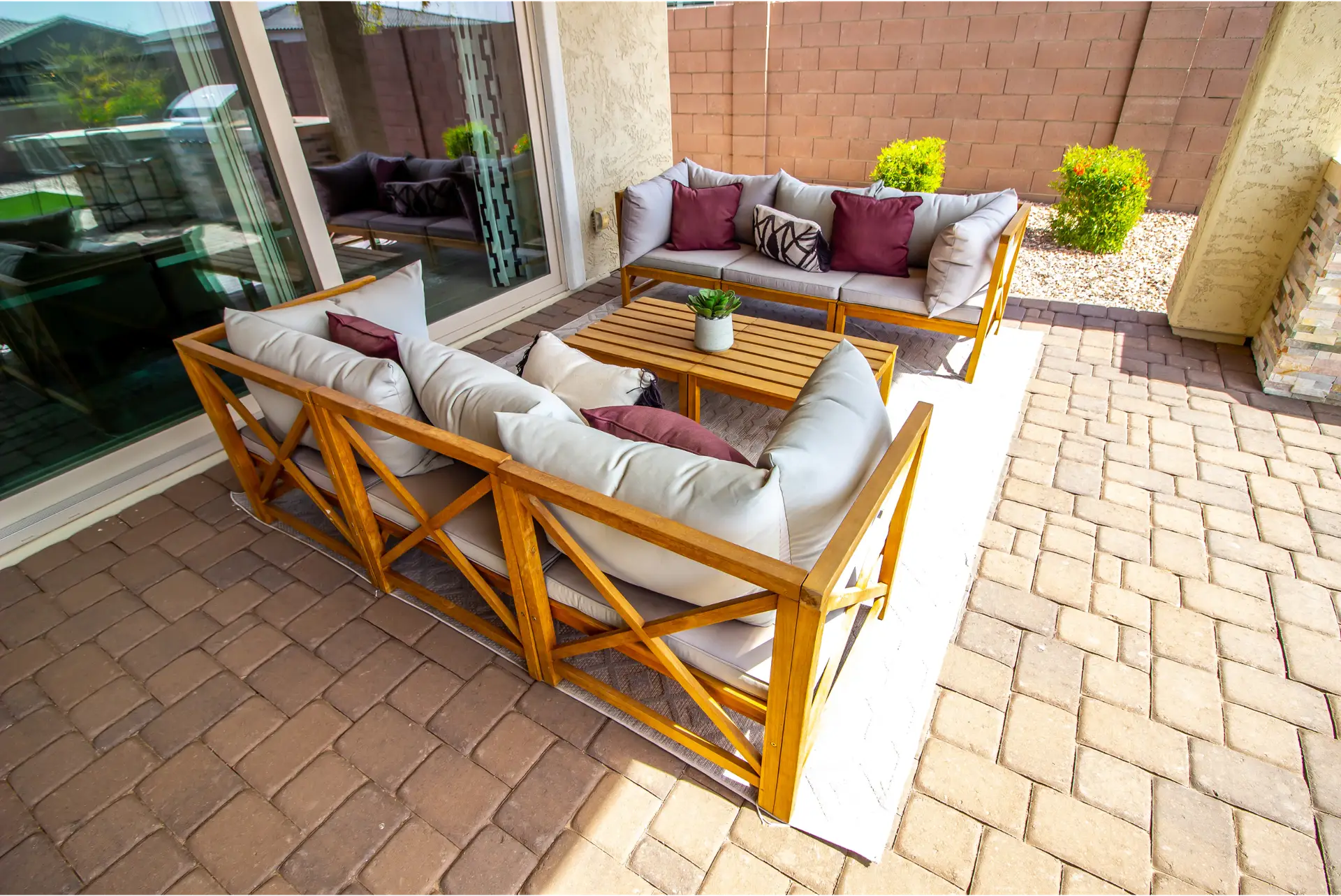
Concrete pavers come in many colors, shapes, and sizes. They can be mixed to create bold borders, herringbone fields, or a natural stone feel.
Pattern mats, texture skins, and custom color options
Stamped concrete patterns and texture skins reproduce stone, brick, random stone, or wood. Color hardeners and stains add layered depth for a realistic, weathered finish.
Blending borders, inlays, and smooth transitions
- Use borders and bands to define edges and tie steps or a driveway apron to the main design.
- Choose colors that balance contrast and maintenance: darker tones hide wear; lighter tones reduce heat gain.
- Anchored previews patterns and colors against siding, masonry, and landscape to ensure cohesion.
Whether you want a modern patio or a timeless backyard gathering space, Anchored matches options to your budget and the look you prefer while designing smooth thresholds for everyday use.
Durability, maintenance, and repairs in real-world conditions
How a surface handles freeze/thaw cycles, roots, and everyday wear determines long-term value. Anchored explains likely performance so you can plan upkeep and avoid surprises.
Surface performance: cracking risk vs interlocking movement
Poured slabs often form visible cracks over years when the subbase shifts, roots grow, or freeze/thaw cycles occur. Repairs can show color and texture differences.
By contrast, concrete pavers use an interlocking system. The units flex with seasonal movement and reduce large slab failure risk.
Maintenance tasks: sealing schedules and joint sand care
Routine maintenance differs by system. Stamped concrete needs cleaning and resealing on a schedule to protect color and resist stains.
Interlocking units need joint sand replenishment every 2–3 years in many climates. Polymeric sand cuts erosion, deters weeds, and lowers upkeep frequency.
Repair paths and safety for wet areas
- Repairs: pavers allow simple swaps or releveling with near-seamless results.
- Repairs: stamped concrete patches are harder to match; major slab damage may require replacement.
- Safety: Anchored specifies slip-resistant textures and sealers for pool decks and outdoor kitchens.
With scheduled care, both options deliver many years of useful service. Anchored provides seasonal maintenance plans tailored to your areas and usage to limit damage and reduce long-term repairs.
Stamped concrete or pavers: choosing the right option for your space
Deciding the best finish depends on traffic, timeline, and whether you want seamless color or modular lines.
Project fit: For patios and backyard gathering zones, both options perform well. One option gives broad customization with continuous patterns and custom colors. The other offers modular shapes, quick usability, and easy unit replacement when repairs are needed.
Project fit: patios, pool decks, driveways, and high-traffic areas
Driveways can use either approach. Consider vehicle access and cure time. Modular units usually allow immediate use. Slab-style surfaces need a short curing window before heavy traffic.
Decision factors: budget, timeline, customization, upkeep, and future repairs
- Budget and timeline: Modular installs often take longer up front but let you drive on the surface sooner.
- Customization: Seamless finishes offer unique patterns and colors; modular systems provide crisp lines and repeatable shapes.
- Upkeep and repairs: Slab-style surfaces need periodic sealing. Modular systems need joint care and occasional releveling, but individual unit swaps are simpler.
Anchored Construction & Restoration walks homeowners through each choice. They provide drawings and itemized proposals so you can pick the option that matches how many years you plan to enjoy the space. Call (865) 316-6933 or email Info@anchoredconstructiontn.com to schedule a site visit.
Conclusion
Balance initial price, lifetime maintenance, and curb appeal to pick the best finish for your yard.
Anchored Construction & Restoration helps Knoxville homeowners plan, price, and build the right hardscape. With 25+ years of local experience, Anchored handles decks, retaining walls, landscaping, excavation, and both stamped concrete and pavers work.
Stamped installations often cost less up front and give seamless color and texture, but need curing and can show visible patchwork when repaired. Hand-set pavers usually cost more per square foot and take longer to install, yet allow immediate use and simple unit replacement.
Both systems need a solid base, proper materials, sealing, and regular maintenance to perform for years. To compare price ranges and get a tailored proposal, call (865) 316-6933 or email Info@anchoredconstructiontn.com.