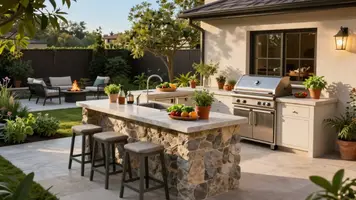
Curious whether a grill area can truly transform your backyard and still fit your budget?
Anchored Construction and Restoration has served Knoxville and East Tennessee for more than 25 years. The team, led by Travis Bullington, combines local knowledge with broad construction experience. They design and build outdoor kitchen solutions for both commercial and residential clients.
This buyer’s guide answers how much does outdoor kitchen cost today and translates national averages into realistic ranges you can use to plan a project at your home. It explains where money goes—from structure and finishes to appliances and trades—so you know the main drivers before you commit.
You will see comparisons between prefab kits and scratch-built frameworks, plus typical labor and patio pricing. The goal is to make budgeting and scheduling clearer and to show how Anchored Construction adds local, accountable experience to your living upgrade.
Key Takeaways
- National averages give a starting point; local conditions change final pricing.
- Per-linear-foot and per-square-foot figures help translate scope to budget.
- Labor, utilities, and patio choice significantly affect the final price.
- Prefab kits save time but may alter long-term ownership value.
- Anchored Construction offers a single point of contact for Knoxville-area projects.
Outdoor kitchen costs at a glance in the present market
Benchmarks help set expectations, but local factors finalize budgets. Use national figures to plan, then refine with regional quotes and site details.
National average, typical range, and extremes
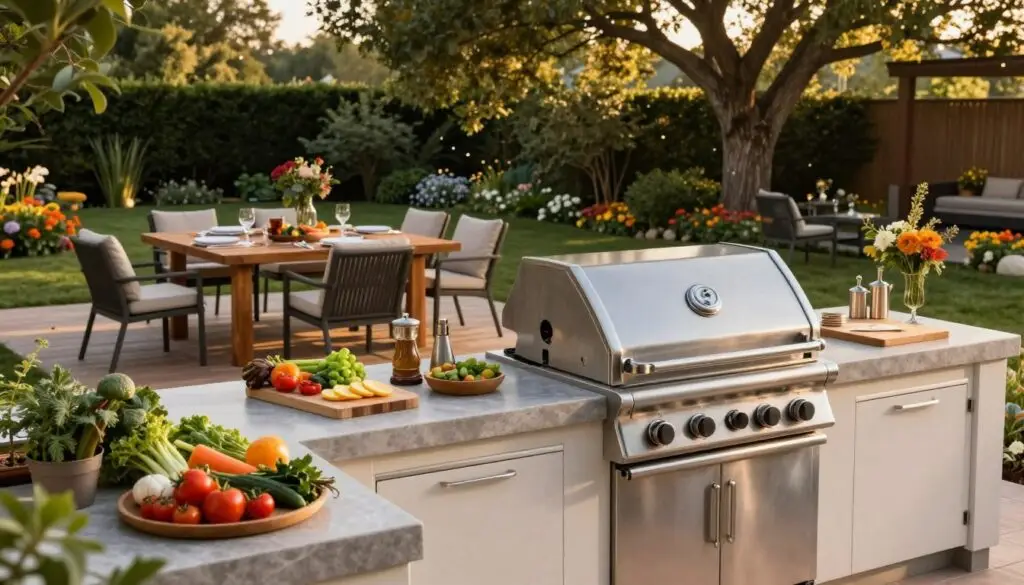
The national average cost centers near $13,180. Typical projects fall between $5,060 and $17,280. High-end builds with extensive masonry and appliances can exceed $40,000, while very small setups may be under $3,000.
What drives the spread: size, materials, appliances, and location
Size matters. More linear foot framework and longer countertop runs raise totals fast. Materials like stone veneer and heavy-gauge metals increase upfront spend but cut maintenance later.
- Appliances and ventilation often lead variability in final budgets.
- Labor and site difficulty affect hourly rates — electricians $45–$100 and plumbers $45–$150 per hour typically.
- Anchored Construction helps Knoxville homeowners translate national averages into realistic local plans and phased project options.
How much does outdoor kitchen cost
Start by comparing per-linear-foot benchmarks to whole-project budgets.
Average spend per linear foot vs. overall project budgets
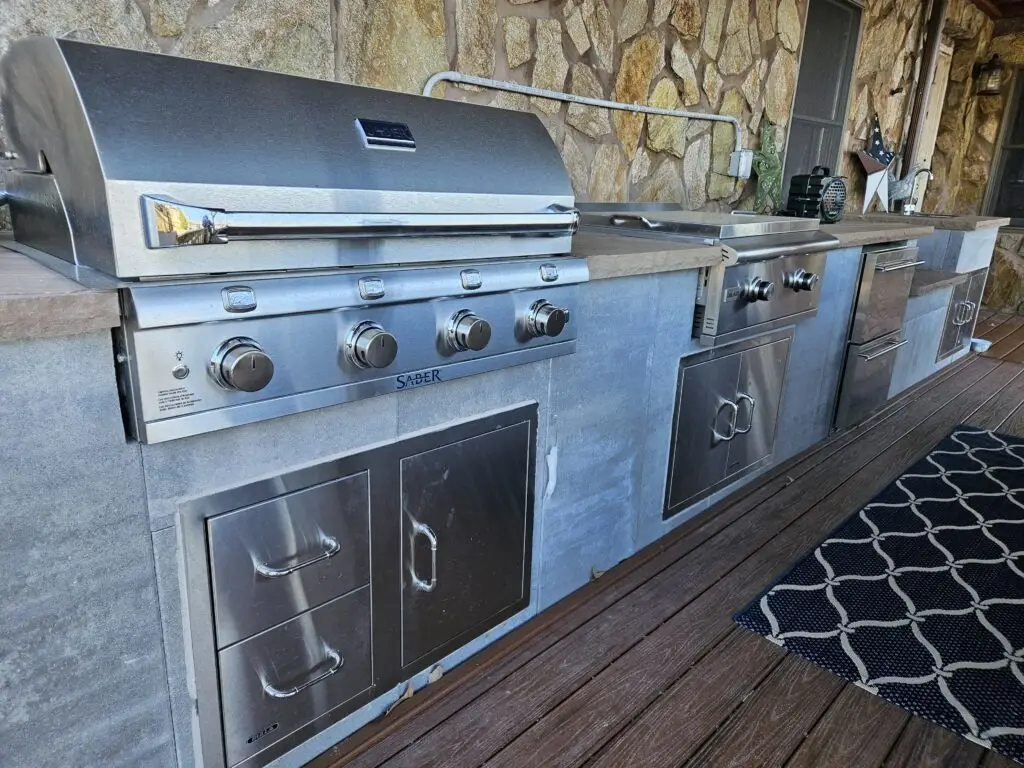
Scratch-built work typically ranges from $1,200 to $2,000 per linear foot. That figure usually includes island framing, finish, a countertop run, a grill head, and core appliances.
When you only count framework and a patio base, national averages near $495 per foot help you test layouts before adding appliances or premium materials.
Prefab and modular kits compared to custom frameworks
Prefab kits launch a functional space fast. Expect $4,000 to $10,000 for basic barbecue islands. Upgrades for counters, storage, and appliance packages increase the final price.
When big-box pricing becomes a false economy
Big-box bundles start low—sometimes $1,500 to $6,000. Low upfront numbers often mean lighter metals, limited warranties, and earlier replacement needs.
- Per-foot clarity: use linear-foot benchmarks to set realistic expectations.
- Appliance impact: moving from an entry grill to premium burners adds thousands.
- Material choices: corrosion-resistant metals and UV-stable finishes cut long-term repairs.
- Layout savings: a compact plan near the house trims lines and utility work.
- Professional trade-off: Anchored Construction advises on warranty, installation control, and lifespan to protect your investment.
Cost by size: mini, small, medium, and large layouts
Size and function drive prices; a compact grill station differs sharply from a full island with seating. Anchored Construction right-sizes plans for Knoxville yards to match cooking needs with available area and budget.
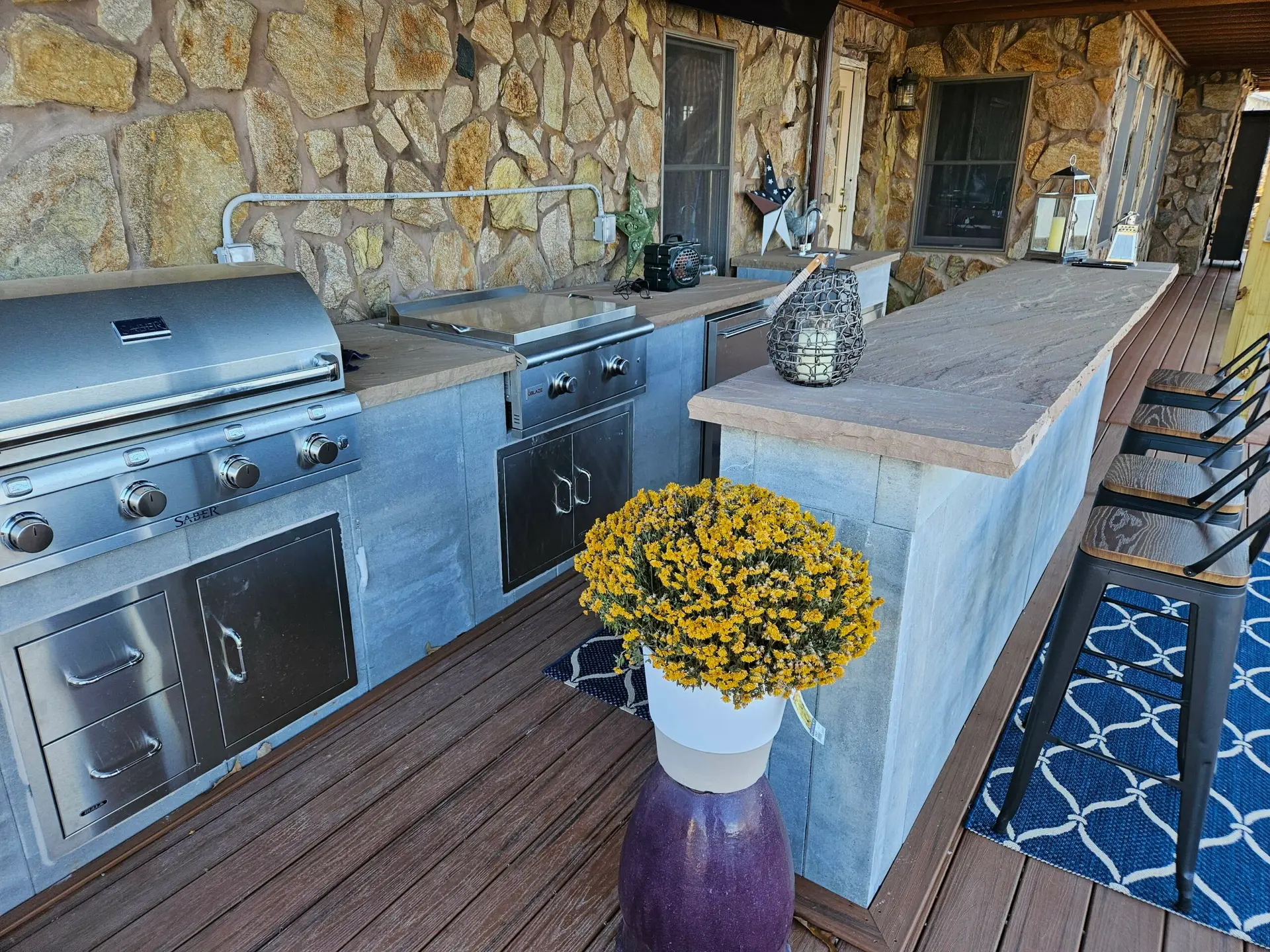
Mini layouts (under 10 linear foot) fit a grill, some storage, and a short top. Expect minimal utility runs and compact appliances that keep the overall cost down.
Small designs (around 13 linear foot) typically add a cooktop, sink, and mini refrigerator. They support weeknight cooking and small gatherings without large utility work.
Medium formats (about 16 linear foot) expand surface and storage. These layouts improve workflow with a second burner and more prep space for serious cooking.
Large kitchens (over 20 linear foot) add multiple grills, refrigeration, seating, and specialty ovens. They raise budgets with extra utilities and finishes.
- Per-foot estimating: frameworks and patios average about $495 per linear foot.
- Prefab option: frames commonly run $250–$475 per foot depending on materials.
- Placement tip: locating the layout near the house trims utility runs and reduces total cost.
Appliance costs and choices that shape your budget
Appliance selection sets the tone for performance, service needs, and long-term value. Start with the main grill because it defines fuel needs, clearances, and the likely appliance size for your island.
Grills and insulating jackets: gas, charcoal, pellet, and electric
Built-in grills range from about $1,500 to $10,000. Insulating jackets add roughly $500–$1,200 when required near combustibles.
Gas, charcoal, pellet, and electric grills offer different flavor, control, and upkeep. Match the grill to cooking style and local gas rules.
Cold storage and ice: refrigerators and ice makers
Under-counter refrigerators commonly run $1,199–$5,000. Ice makers sit between $2,100 and $5,000 and need water and a drain line.
Outdoor-rated refrigerators cost more because they must work harder in summer heat and resist weather exposure.
Ventilation and hood installation
Vent hoods typically cost $2,000–$6,000. Installation adds $800–$2,000 for roof penetrations and code compliance.
Covered cooking areas usually require a hood sized to the grill capture area and proper duct routing for safe operation.
When to splurge on 304 stainless steel
Choose 304 stainless on core appliances exposed to rain and heat. This alloy resists corrosion and keeps finishes, hinges, and seals working longer.
- Start with the grill: it sets utility and ventilation needs.
- Prioritize hood and main appliance: defer specialty items if budget tightens.
- Right-size cutouts: use standard widths to simplify future replacements.
Countertops and materials: per square foot pricing and durability
Countertop choice shapes both daily use and long-term upkeep for any grill island. Anchored Construction helps clients match appearance, maintenance, and Knoxville sun exposure to real-world needs.
Typical granite runs near $65–$75 per square foot, with stone generally from $35–$80 per square. Concrete tops often fall between $60–$95 per square foot. Stainless steel sits higher at $75–$100 per square foot. Soapstone spans $50–$160 per square foot, and ceramic tile can be $6–$50 per square.
Material notes:
- Granite: durable, mid-range per square, needs periodic sealing and gentle cleaners.
- Concrete: modern look, wider per square variation; sealing and wax keep it resilient.
- Stainless: weather-resistant, sanitary, pricier per square foot but long lasting.
- Tile and soapstone: budget and specialty options; grout and oiling routines matter.
Sun and UV exposure guide choices. Natural stone and stainless tolerate sun best. Engineered quartz is better for covered spaces because UV can fade binders. Edge profiles, thickness, and cutouts add to final per square pricing. Anchored Construction clarifies the range so your design looks great today and ages well through seasonal weather.
Cabinets and island finishes: quality, materials, and cost ranges
Selecting cabinet systems and facades defines the look and longevity of an island. Anchored Construction specifies outdoor-grade cabinets and finish systems that resist moisture, UV, and temperature swings.
Choose between HDPE, stainless steel, or framed inserts based on use and maintenance. HDPE resists moisture, chlorine, and grime with little upkeep. Stainless steel is strong and sleek but needs protectant and regular cleaning to slow pitting. Framed inserts can lower initial spend but may need tighter hardware checks over time.
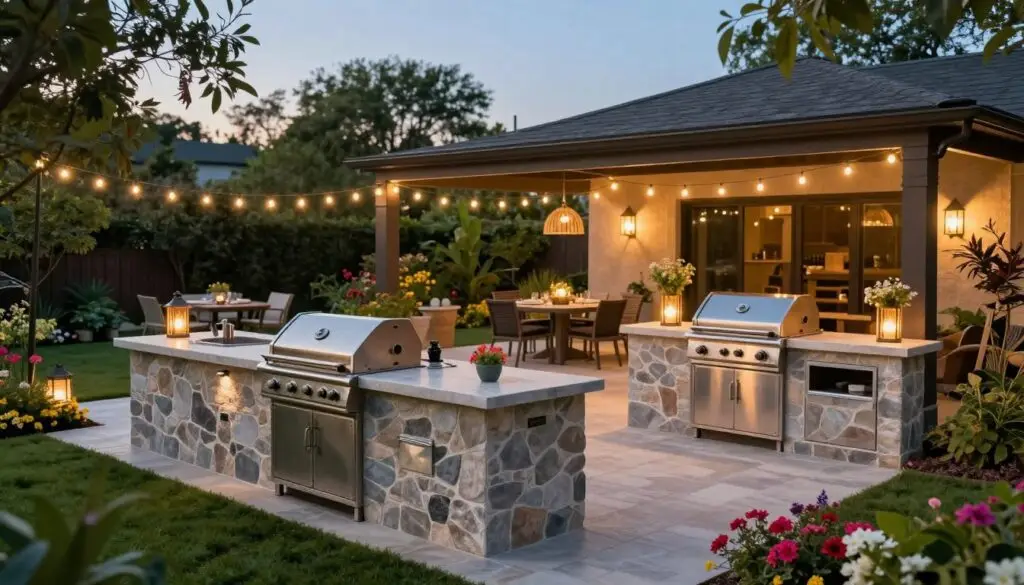
Finish facades change appearance and the per square price. Typical facade pricing runs: stucco $5–$8 per square foot, brick veneer $9–$15 per square foot, manufactured stone $15–$25 per square foot, and natural stone $20–$40 per square foot.
- Durable boxes: proper slides and fasteners keep doors aligned.
- Coordinate early: plan cutouts with countertops and appliances to avoid rework.
- Climate details: plinth drainage and UV-stable finishes suit Knoxville summers.
Anchored Construction will outline installation steps, maintenance notes, and realistic costs so your kitchen matches style and service life goals.
Site work, patios, and flooring: what your outdoor space may need
Begin site planning by checking slab level, slope, and drainage before the first design decision.
Anchored Construction evaluates existing slabs and pavers. The team confirms load capacity and pitch. If the slab is sound, reuse can lower the per square foot expense and shorten timelines.
Using an existing patio vs. building new
Using a good slab reduces demolition and base work. That lowers the per square price and speeds the project.
When a slab is cracked, low, or drains poorly, a new patio gives design freedom. Expect added excavation, forming, and curing time.
Poured concrete, pavers, natural stone, and stamped options
Typical ranges guide choices by budget and finish:
- Concrete: $3–$6 per square foot.
- Stamped concrete: $8–$28 per square foot for texture and pattern.
- Concrete pavers: $4.50–$21 per square foot for modular repairs.
- Brick pavers: $8–$19 per square foot for a classic look.
- Natural stone: $7–$30+ per square foot for premium durability.
Practical notes: pavers ease access to lines and spot repairs. Stamped finishes boost the per square aesthetic but add price. Natural stone needs skilled setting and thoughtful edge transitions.
For DIY on simple, flat areas, labor savings are possible. Still, compacted base and proper drainage prevent settling under grills and cabinets. Anchored Construction handles site work end-to-end, ensuring the patio and base let the kitchen install square, drain properly, and last through seasons.
Utilities and installation: gas, water, and electrical lines
Planning utility lines early prevents delays and keeps trades coordinated during install. Anchored Construction staggers trenching, rough-ins, and cabinet delivery so work flows. That approach keeps inspections predictable and reduces rework.
Electricians commonly charge $50–$100 per hour. Typical installs run 6–10 hours depending on circuits and run length. New gas lines usually cost $15–$20 per linear foot. These figures set a baseline for labor and material estimates.
Plumbers range $45–$150 per hour. Water line installation varies widely. Expect $500–$2,000 based on distance and access. Combine these numbers to estimate utility costs for an outdoor kitchen without surprises.
Place a kitchen near the home when possible. Perimeter locations shorten electrical lines, reduce trenching, and cut inspection cycles. A satellite layout deeper in the yard demands independent runs and adds time and coordination among trades.
- Plan gas capacity for burners and verify regulator sizing and shutoffs.
- Confirm electrical needs: GFCI, dedicated circuits for refrigeration, and lighting for safe use after dark.
- Sequence work: rough-in lines, complete patio or slab, then set cabinets and finish tie-ins.
- Document as-builts with labeled shutoffs to ease future service and maintenance.
Local East Tennessee codes affect depth, bonding, and ventilation. Anchored Construction coordinates permits and testing so installation finishes cleanly and on schedule for your project.
Timing your purchase: seasonality, lead times, and promotions
Plan purchases around slower months to gain vendor attention and clearer schedules. Anchored Construction advises Knoxville clients to begin procurement in late fall or winter for better pricing windows and faster starts.
Why off-season buying can reduce costs and wait times
Demand slows in cooler months. Suppliers and installers often offer promotions and flexible schedules then. That reduces wait time and keeps your project moving.
Spring and summer bring heavy booking. Lead times can lengthen by weeks as calendars fill. Locking orders early preserves appliance choices and firm install dates.
Plan the sequence: finalize design and appliance selections during the off-season. Complete permitting and utility coordination before spring. That way, patio curing and cabinet delivery align without delay.
- Seasonality affects pricing and availability — buy off-peak to compress timelines.
- Promotions in late fall and winter can stretch your budget for higher-spec items.
- Early scheduling protects your desired installation date in a busy area.
- Knoxville’s mild winters often allow selective site work, improving spring readiness.
Clear lead-time communication helps align family events and the final timeline at your home. Anchored Construction sequences design, procurement, and site work so your kitchen arrives on time and within the agreed budget.
Pro install vs DIY: real-world costs, savings, and time
Deciding between a self-build and a pro install starts with a clear look at time, tools, and risk.
Anchored Construction offers turnkey builds and supports clients who want to self-perform select scopes. Modular cabinet installation typically runs $650–$2,000. Vent hood installation with penetrations and ducting commonly adds $800–$2,000.
Ready-to-finish and ready-to-assemble paths
Ready-to-finish frames ask for stucco, stone, or tile skill. Mistakes in surfacing can cause water problems or uneven faces.
Ready-to-assemble kits lower carpentry needs but require precise leveling and fastening to keep doors and drawers aligned.
Tools, skill level, and where hiring a pro pays off
- DIY can save 20%–40% when you handle leveling, fastening, and assembly.
- Licensed trades must complete electrical and gas installation for safety and code compliance.
- A contractor brings crew coordination, heavy-lift equipment, and trade scheduling experience.
- Homeowners often choose a hybrid: site prep and light assembly, with pros for utilities and final set.
Plan documentation—cut sheets, templates, and clearances—so installation and inspections go smoothly. Anchored Construction helps you decide what to DIY and what to outsource so the finished kitchen looks professional and performs reliably.
Value, ROI, and long-term maintenance considerations
Resale value ties directly to regional climate and how often homeowners use an outdoor living space. A well-placed, weather-ready build adds daily enjoyment and improves perceived home quality.
In warm regions, ROI can approach 100%–200% because buyers use the space year-round. In colder areas, the resale lift is smaller but still positive when the area is sheltered and durable materials are used.
Care routines for appliances, cabinets, and countertops
Regular care keeps value steady and reduces repair bills. Stainless steel needs frequent cleaning to limit pitting. HDPE faces clean with simple washdowns and resist moisture.
- Daily value: regular cleaning after cooking preserves finishes and appeal.
- Seasonal prep: drain lines, shut water, unplug the outdoor refrigerator, and cover major components for winter.
- Appliance upkeep: service gaskets and igniters on schedules to keep reliable ignition and heat.
- Countertops and materials: seal stone, oil soapstone, and follow fabricator care for concrete tops.
Anchored Construction educates clients on ROI drivers in East Tennessee. The team provides turnover guidance so homeowners protect finish, function, and the long-term value of their kitchens.
Knoxville cost context and why Anchored Construction is your trusted contractor
A nearby contractor with local experience can save time and avoid common regional pitfalls. Anchored Construction & Restoration has served Knoxville since 2000. The team is led by Travis Bullington, a Knoxville native, and brings more than 25 years of combined experience.
Local factors in East Tennessee: labor, materials, weather, and permitting
Soil and drainage in this area affect patio choice and layout. UV, heat, and storms make corrosion-resistant metals and UV-stable finishes wise selections.
Permits for gas and water commonly add a few hundred dollars. Review times can extend schedules by weeks in stricter jurisdictions. Labor rates and material availability shift by season. Anchored Construction sequences trades to hold dates and control scope.
Design-build expertise from Anchored Construction and Restoration
A single design-build contractor aligns layout, utilities, and finishes. That reduces handoffs and improves value for homeowners. Services span decks, concrete, landscape, hardscapes, retaining walls, warehouse work, excavation, and full outdoor kitchen design and construction.
- Local knowledge of codes and soil conditions.
- Sequenced trades to limit delays and surprises.
- Transparent proposals with clear milestones.
Get a tailored estimate for your backyard
Call (865) 316-6933 or email Info@anchoredconstructiontn.com for a walkthrough. Anchored Construction will tailor a plan that fits your home, goals, and budget.
Conclusion
A smart approach balances appliance quality, materials, and utility planning to protect your investment.
Final figures reflect scope, finishes, appliance quality, utilities, and timing. National averages give a baseline. Regional choices and layout fill in the true number.
The right outdoor kitchen delivers daily enjoyment and measurable value when designed around how you cook, host, and move through your backyard. Keep quality where it matters: grill performance, durable cabinets, and UV-ready tops.
Plan utilities early, pick a clear layout, and decide which tasks to DIY and which to hire. Anchored Construction & Restoration guides homeowners from concept to a finished space with clear steps and firm timelines.
Start with a site visit. Call (865) 316-6933 or email Info@anchoredconstructiontn.com to get a tailored plan and realistic numbers for your home.
FAQ
What is the current national average and typical range for building an outdoor kitchen?
National averages vary widely. Most homeowners spend between $5,060 and $17,280 for a complete build, while high-end projects exceed $40,000. The range depends on size, finishes, and appliances. Anchored Construction & Restoration tailors estimates for East Tennessee based on local labor and material rates.
What factors drive price differences between budget and premium builds?
Size, materials, and appliances are the largest drivers. Premium stone, 304 stainless steel cabinets, built-in refrigerators, and a commercial-grade grill add substantially to budgets. Site work, utility runs for gas and electric, and custom design also increase costs.
How do prefab or modular kits compare to fully custom builds?
Prefab kits typically lower upfront spend and shorten lead times. They suit simple footprints and basic appliance packages. Scratch-built frameworks offer tailored layouts, premium materials, and better long-term durability but require more design and installation investment.
Is buying from big-box retailers a good way to save money?
Big-box units can be cost-effective for entry-level setups. However, lower material quality, limited warranties, and fit issues often raise repair and replacement costs. For lasting value in Knoxville’s climate, professional design and better materials usually pay off.
Which appliances most influence the overall budget?
Grills, refrigeration, and outdoor-rated refrigeration or ice makers are top budget items. High-end grills and built-in smokers add notable cost. Adding a vent hood, outdoor-rated oven, or specialty appliances like pizza ovens increases both equipment and installation expenses.
Should homeowners choose 304 stainless steel appliances and cabinets?
304 stainless resists corrosion and holds up well to weather and heavy use. It costs more initially but reduces maintenance and replacement needs. In East Tennessee’s variable climate, 304 stainless often provides the best long-term value.
What are typical countertop material price differences per square foot?
Prices vary by material and fabrication. Concrete and tile can be economical, granite and soapstone sit in the mid-range, while quartz and high-end fabricated stone cost more. Stainless steel tops are durable but require specialized installation. Anchored Construction & Restoration can provide per-square-foot estimates during a site visit.
How does sun exposure and UV stability affect material choice?
Direct sun accelerates color fade and thermal expansion in some materials. Choose UV-stable finishes, sealed natural stone, or engineered surfaces rated for exterior use. Proper sealing and shade features extend surface life and reduce long-term maintenance.
What cabinet and island finish options are best outdoors?
HDPE and marine-grade polymer cabinets resist moisture and rot and cost less than 304 stainless. Stainless steel cabinets offer longevity and a professional look but at higher price. Finish facades—stucco, brick veneer, manufactured stone, or natural stone—allow a custom aesthetic and impact overall project price.
Can an existing patio support a new kitchen or is new site work required?
If the existing slab is level, properly drained, and within load limits, it may be reused. Many projects require slab reinforcement, new footings, or full replacement to meet code and drainage needs. Poured concrete, pavers, and natural stone each have different prep and cost profiles.
What utility work should homeowners expect for gas, water, and electrical?
Expect line runs, trenching, permits, and contractor fees. Gas line costs depend on distance and permit requirements. Electrical work includes GFCI circuits, dedicated breakers, and outdoor-rated outlets. Hourly labor and per-foot charges vary; Anchored Construction & Restoration provides transparent breakdowns.
Are there seasonal advantages to scheduling a build off-season?
Yes. Off-season scheduling can lower labor costs, shorten lead times, and make securing skilled trades easier. Appliances and materials sometimes have promotions in slower months. Planning in advance helps lock better pricing and availability.
When does hiring a pro make more sense than a DIY path?
Professional installation matters for gas hookups, complex electrical, structural work, and weatherproofing. DIY can save money for simple prefab kits and basic assembly. For design complexity, code compliance, and resale value in Knoxville, a licensed contractor often delivers better long-term outcomes.
What ongoing maintenance affects long-term value and ROI?
Regular cleaning, sealing stone surfaces, winterizing water lines, and servicing grills protect investment. Stainless steel needs periodic polish to avoid surface corrosion. Proper maintenance preserves aesthetics and resale appeal, improving overall ROI.
How does Anchored Construction & Restoration address local Knoxville considerations?
Anchored Construction & Restoration factors East Tennessee labor rates, seasonal weather, and permitting into project plans. Their design-build approach streamlines decisions on materials, utilities, and timelines. For a tailored estimate, contact (865) 316-6933 or Info@anchoredconstructiontn.com.