Have you ever wondered why some walkways last decades while others crack in a few years?
Anchored Construction & Restoration brings over 25 years of local experience to every project. The team blends outdoor craftsmanship with proven methods to deliver lasting results across Knoxville and East Tennessee.
This guide explains how professional-grade formwork sets the stage for a clean, durable walkway that handles Tennessee weather and daily use. It covers planning, drainage, excavation depth, base prep, reinforcement, and pour readiness.
Readers will learn which materials and systems help achieve sharp edges, consistent slab thickness, and smooth curves. Anchored Construction outlines when a DIY approach can work and when complex conditions call for experienced contractors.
Contact Anchored Construction & Restoration at (865) 316-6933 or Info@anchoredconstructiontn.com to request a site review, estimate, or turnkey installation. Their local knowledge helps homeowners avoid common pitfalls and get the right results.
Key Takeaways
- Professional formwork improves edge control and surface flatness.
- Proper planning reduces errors and costly rework.
- Local expertise matters for East Tennessee soils and drainage.
- Know when to hire contractors for complex or large projects.
- Anchored Construction offers site review and turnkey installation.
What this how-to guide covers and why formwork quality matters
A well-planned path starts long before the first stake is driven into the ground. Anchored Construction emphasizes safe planning and thoughtful design for Knoxville homeowners. Call (811) to mark utilities before digging. Then confirm elevation so the finished top sits even with freshly cut grass for easy mowing.
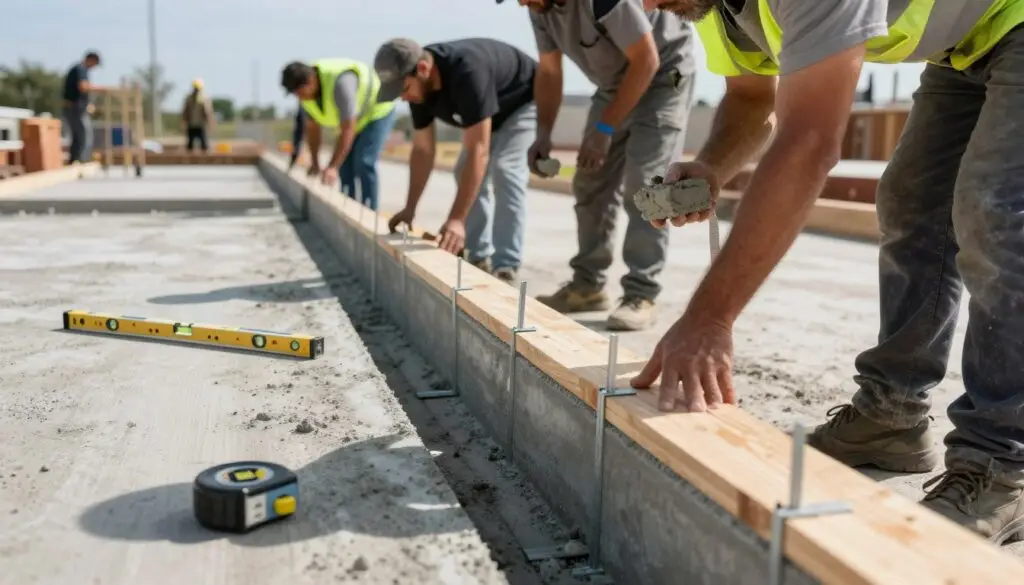
Plan the route, drainage, and safety.
- The guide walks the full planning arc: mapping the route, confirming width, and choosing straight lines or gentle curves that fit mower clearance.
- Safety first—811 marking prevents accidental utility hits during staking and excavation.
- Form quality controls edge crispness, slab thickness, and joint placement to improve long-term results.
- Soil and site conditions guide form selection and base design to avoid water pockets that cause frost heave or settlement.
Readers will learn which tools to stage—tape, marking paint, level, gauge board, stakes, screws, and rake—so setup runs smoothly. The section also explains types of systems and practical practices like stable bracing, correct stake spacing, and smooth transitions at walk intersections.
For help with route options, drainage, or code questions, contact Anchored Construction & Restoration at (865) 316-6933 or Info@anchoredconstructiontn.com. The team coordinates with contractors for larger projects and can manage permitting and scheduling.
Step-by-step: Install sidewalk forming that sets you up for a flawless pour
Begin with a clear route and marked utilities to avoid surprises during excavation. Call 811, then spray the path and any radii so the trench follows the intended layout.
Excavate and prep
Slice sod and dig about 6 inches deep, leaving roughly 3 extra inches on each side for the edge systems. Set the trench bottom 6 inches below grade so a 4-inch gravel base fits under a 4-inch slab.
Set and stake
Drive stakes about 1 foot from ends, then every 3 feet along the run. Keep tops about 1 inch above grass for a neat finish and easier mowing.
Compact and base
Use a plate compactor to firm the subgrade. Spread 4 inches of aggregate between the edges and pack soil outside to support curves.
Reinforcement and pour readiness
Place steel mesh at least 3 inches back from the edge supports, overlap 6 inches, and tie laps. Hold mesh about 2 inches above the gravel with small dabs of mortar or bricks. Trim stake tops, confirm end transitions, then pull the material with a steel rake during placement to avoid segregation.
- Anchored Construction & Restoration brings 25+ years of field-tested sequencing and offers bobcat and excavation services for efficient trenching in Knoxville and East Tennessee.
Concrete sidewalk forms: choosing materials, lengths, and curve solutions
Choosing the right edge system sets the tone for durability, finish, and ease of removal. Anchored Construction helps homeowners weigh cost, reuse potential, and the visual shape they want across their property.
HDPE flexible options for smooth curves
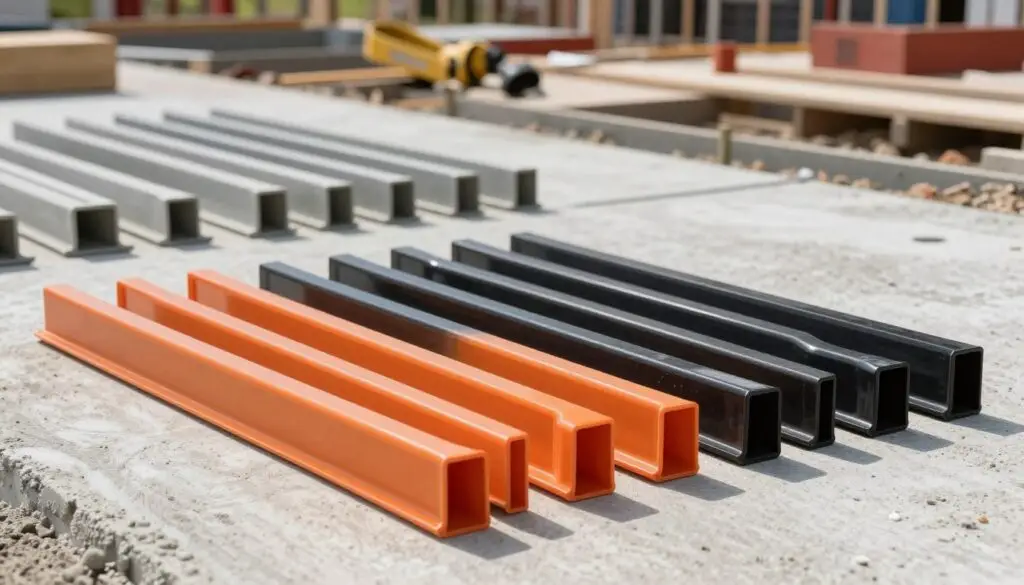
HDPE flexible products are UV-resistant and low‑adhesion. They trim easily, strip fast, and give a glass-like finish. Use wood or steel stakes; screws secure to steel stakes during vibration. These lengths resist kinking and make clean circles and flowing curves.
Masonite and straight solutions
Hardboard is cost-effective for long straight runs. It works for short-term projects but wears faster and can swell after moisture exposure. For sharper sightlines, straight forms deliver crisp edges but offer fewer reuses than HDPE.
Aluminum and steel systems
Aluminum resists corrosion and stays rigid for repeat jobs. Steel is rugged for tough sites but can kink on tight radii. Both accept wood or steel stakes; screws lock connections to steel stakes for stable setups.
Specs that matter
- Standard length: 95‑inch pieces at 1/4‑inch thickness balance flexibility and strength.
- Set sizes vary by height: 4– and 5‑inch sets (10 pieces), 32 ft sets (4 pieces), 8‑inch (6 pieces), 12‑inch (4 pieces).
- Match stake type and count to avoid mid‑pour interruptions.
Recommendation: Select by run type—tight curves, long straight lines, or mixed profiles—and let Anchored Construction recommend the best system and supply the crew to install it right the first time.
Pro practices, tools, and setup tips for cleaner edges and faster set times
A few pro habits and the correct tools make finishing faster and edges sharper.
Essential tools and forming accessories
Stage the basics: a 4‑ft level, a gauge board cut to your sidewalk width, and sturdy wood or steel stakes with matching screws.
Include a steel rake for pull‑through placement and a plate compactor to firm the base before placement.
Pro practices that protect edges and speed times
- Check line and grade every 8–10 feet. Short checks keep edges true and reduce patching.
- Re‑brace before the pour to prevent blowouts and honeycombing at the form interface.
- On long runs, stage materials and preassemble hardware so crew times stay efficient.
When to bring in contractors
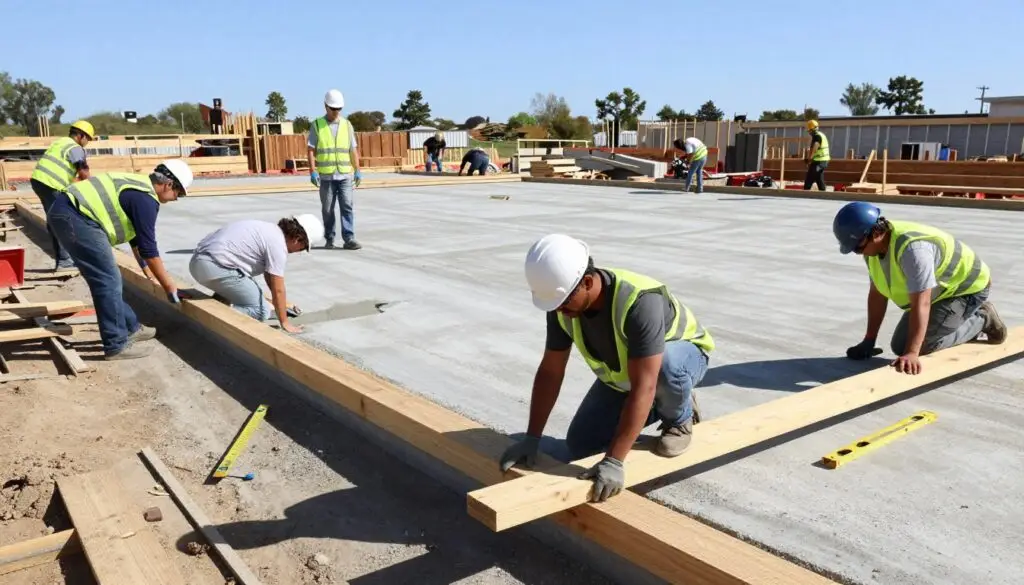
Complex radiuses, steep transitions, or poor soils signal the need for experienced contractors. Pros handle sequencing, base corrections, and staged pours.
Anchored Construction & Restoration serves Knoxville and East Tennessee with turnkey crews. They coordinate excavation, system selection, and curing management to keep projects on-track.
For an estimate or consultation, call (865) 316-6933 or email Info@anchoredconstructiontn.com.
Conclusion
Finish quality hinges on a few precise steps taken before the pour. Proper concrete forming and careful checks set the tone for a lasting path.
Quality forms hold the slab shape and keep edges true. Correct staking and a matched system prevent movement and pockets that cause damage.
Set elevations, cross‑slope, and expansion plans first. Verify every few feet so the slab drains and wears well under local conditions.
For homeowners who want certainty on timeline and finish, experienced contractors manage system selection, form setup, and the full project from layout to final cure.
Anchored Construction & Restoration brings 25+ years of local construction experience. Call (865) 316-6933 or email Info@anchoredconstructiontn.com to schedule a site review and get a clear plan tailored to your site.