Which surface will protect your yard and boost resale more: a patterned set of pavers or a poured slab? That question drives many Knoxville homeowners to rethink their plans.
Anchored Construction & Restoration has served East Tennessee since 2000. Led by Knoxville native Travis Bullington, the team brings 25+ years of hands-on expertise to every residential and commercial project. They help you weigh strength, cost, maintenance, curb appeal, and long-term value.
Pavers often offer higher compressive strength and easy sectional repairs. Concrete can cost less up front and finishes faster, but repairs may show and need more sealing. Proper base work and smart installation make either system last for decades.
Call (865) 316-6933 or email Info@anchoredconstructiontn.com to discuss your installation, timeline, and investment in your home.
Key Takeaways
- Anchored Construction guides homeowners through design, estimating, and installation.
- Pavers give sectional repair options and strong durability in many climates.
- Concrete lowers initial cost and speeds up project completion.
- Good base preparation and maintenance drive long-term value.
- Consider local weather and resale expectations when choosing materials.
Concrete vs pavers at a glance for Knoxville homeowners and businesses
Choosing the right hard surface means weighing fast installation against long-term repairability. Anchored Construction & Restoration installs both poured slabs and interlocking systems across Knoxville. The team advises on structural needs, aesthetics, and intended use before work begins.
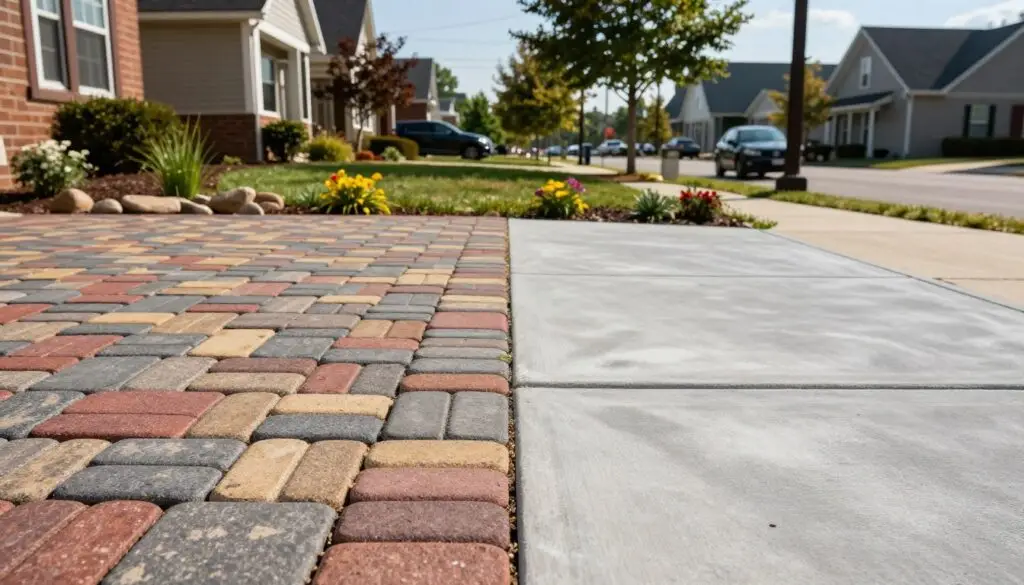
What each option is and how it’s built.
Poured slabs are one continuous pour over a compacted base with reinforcement, finished, and left to cure. They create a smooth, uniform plane that works well for routine driveways and utility areas.
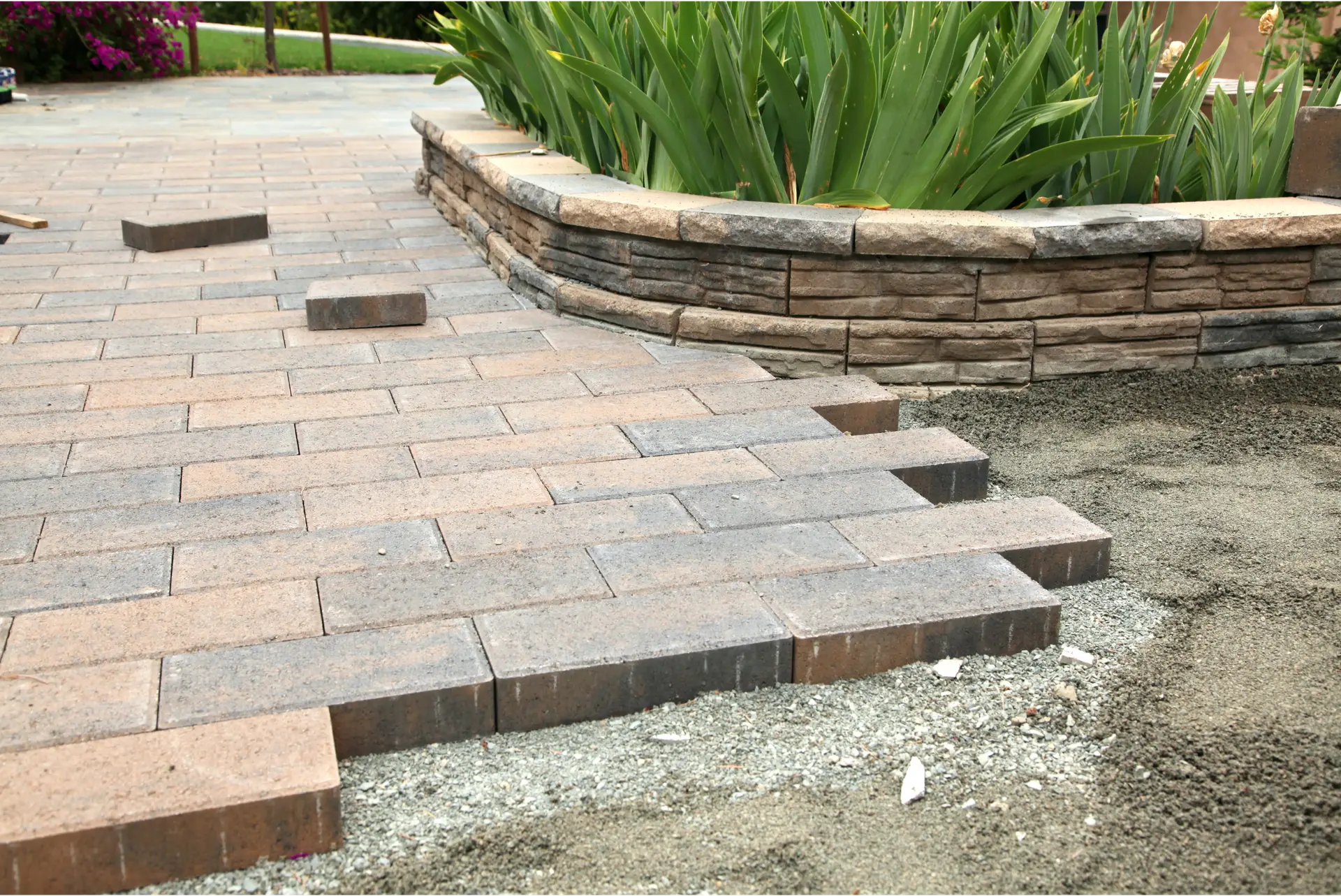
Pavers are individual units — concrete, clay brick, or natural stone — set over a thicker aggregate base and bedding sand. The system is flexible and allows immediate use after compaction. Small shifts don’t lead to large cracks.
- Slabs suit large, uninterrupted expanses where speed and cost control matter.
- Pavers excel for patterns, borders, curves, and easy spot repairs.
- In tight grades or high-turn areas, pavers allow fine elevation tuning to manage runoff.
Upfront cost vs long-term value: where your investment pays off
A smart surface decision balances upfront price with durability and resale potential.
Typical per square foot ranges and what drives price.
Concrete often starts lower per square foot because installers place a single poured slab quickly. Pavers cost more per square due to hand placement, cutting, and edge detail.
Typical per square foot ranges
- Initial cost reflects excavation, base depth, access, drainage, and edge choices.
- Material selection affects price: standard units cost less than premium stone or colored finishes.
- Anchored Construction provides itemized estimates so your budget matches the project plan.
Maintenance and repair costs over time
Sealing cycles change total ownership costs. A poured slab commonly needs sealing every 2-3 years. Pavers usually go 3-5 years between sealing.
Repairs differ too. Individual pavers can be replaced with minimal disruption. Slab patches are often visible and sometimes require larger work.
Resale appeal and value added to your home
Patterned pavers often signal premium outdoor living and can boost perceived value. A clean, well-finished slab still delivers solid functional value for buyers.
Anchored Construction advises a decision framework: initial budget, expected use, willingness to maintain finishes, and how long you plan to stay. That aligns your investment with the long-term value you expect.
Strength, durability, and repairs under real-world loads
Strength matters when vehicles, trailers, and seasonal weather meet a driveway. Interlocking units and slabs behave very differently under stress. Anchored Construction engineers base thickness and compaction for vehicle weight, turning movements, and local soils to reduce settlement over time.
Compressive capacity and load distribution
Interlocking pavers commonly test around 8,000–12,000 PSI. A typical slab often falls near 2,500–3,000 PSI. High compressive strength plus jointed load transfer helps pavers disperse forces across the base.
Cracking risks and freeze-thaw cycles
Monolithic slabs concentrate stress. Subgrade shifts and freeze-thaw cycles make a slab more likely crack when control joints fail to compensate.
Pavers tolerate small movement at joints. That flexibility reduces the chance of visible failures in climates with seasonal freeze-thaw cycles.
Repairs: invisible fixes vs visible patching
- Pavers let installers lift units, fix the base, and reinstall the same pieces for an almost invisible repair.
- A slab repair usually leaves a visible patch because new material and finish age differently.
- Anchored Construction designs edge restraints and compaction to protect interlock under heavy turning loads and long service time.
Installation process and project timeline
A clear schedule and careful site work set expectations before any heavy equipment moves in. Anchored Construction manages excavation, grading, compaction, edge restraints, drainage, forming, finishing, and a final walk-through so homeowners know what to expect.
Site prep, base, and curing vs compact-and-use
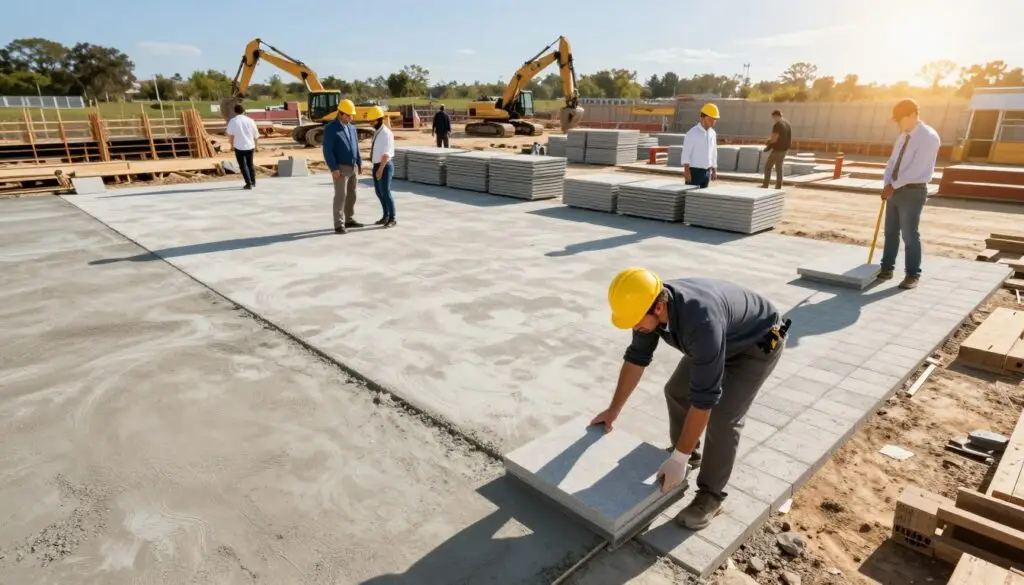
The installation process for a poured slab includes excavation, base placement, forming, reinforcement, placing, finishing, and a mandatory cure period before traffic. Allowing proper cure time protects the surface from early damage.
Paver installation requires deeper excavation, layered aggregate for a strong base, bedding sand, hand-laying units, cutting to fit, compaction, and joint stabilization. After compaction the surface is typically ready for use.
How installer skill impacts longevity and performance
Proper base depth and compaction are the backbone of both systems. Anchored Construction sets specs by load and soil so the surface resists settlement and rutting.
- Bedding thickness and sand consistency ensure even support and tight joints for pavers.
- Control joints, edge restraints, and clear drainage extend life and improve wet-weather performance.
- A detailed project schedule covers site prep, weather contingencies, cure periods, and closeout steps so each milestone is clear.
Concrete or paving: design flexibility and curb appeal
Patterns, edges, and color tie a home to its landscape and guide movement. Anchored Construction designs patios, walkways, and driveways with borders, inlays, and accents that read as intentional, not added later.
Patterns, colors, textures, borders, and accents
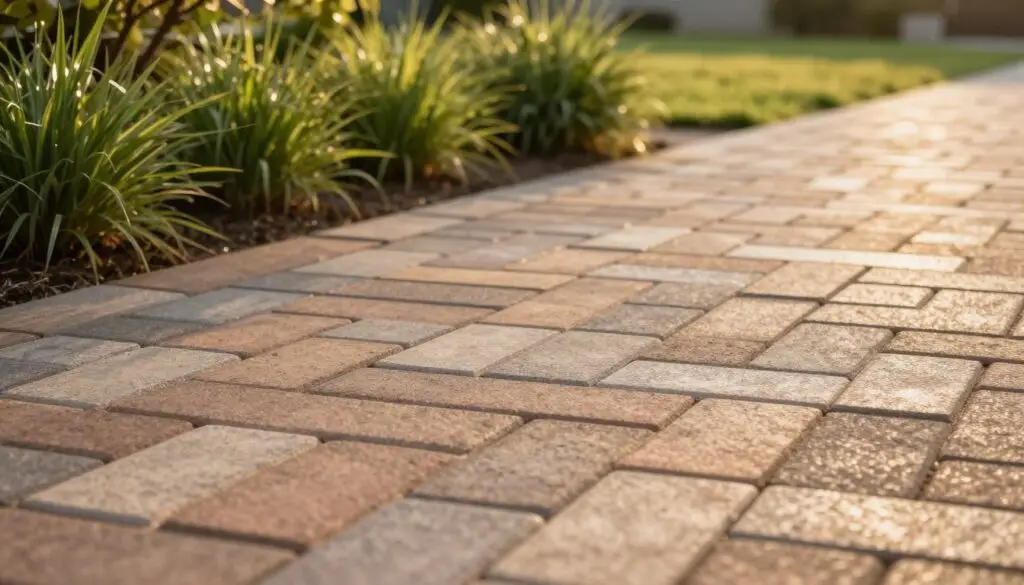
Pavers unlock herringbone, basketweave, and custom layouts. Blended paver colors hide wear and smooth transitions. Textured units add traction around pools and on sloped walkways.
Natural stone or brick accents bring contrast and warmth. Paver modules allow future patio extensions with minimal disruption. Anchored Construction aligns patterns with sightlines for a cohesive look.
Decorative concrete options and their limits
Decorative concrete can mimic stone or brick through stamping and integral color. It gives a unified surface with fewer joints and a fast installation schedule.
Repairs on a continuous slab leave visible patches. Color can fade faster without sealing. For long-term flexibility, paver systems and stone accents often offer easier changes and invisible fixes.
- Choose materials to match house style and landscape.
- Use blended colors for a natural, forgiving look.
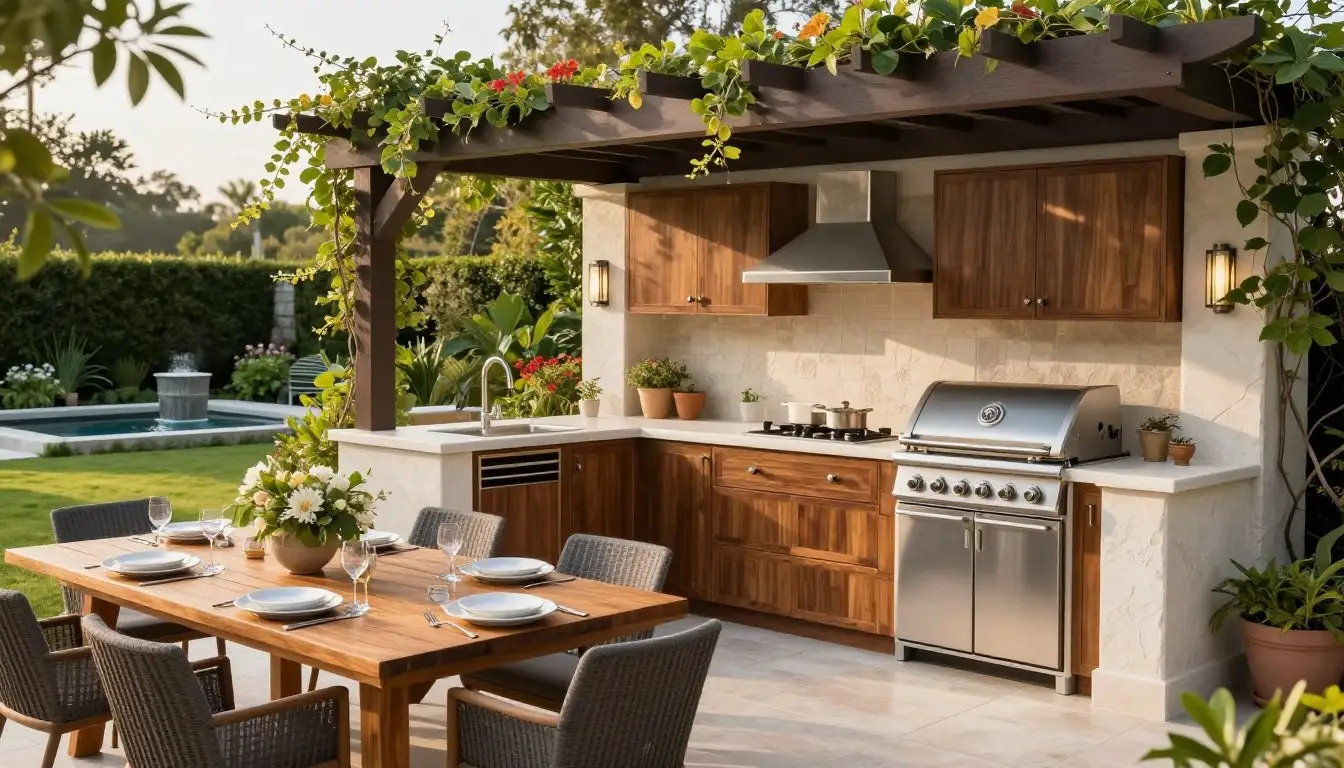
- Coordinate steps, walls, and outdoor kitchens to keep finishes consistent.
Maintenance realities in East Tennessee weather
Seasonal swings in East Tennessee mean surface care plans must match heat, rain, and occasional freezes.
Anchored Construction & Restoration offers clear care plans with a recommended sealing cadence, cleaning tips, and guidance on when to refresh polymeric sand joints for pavers.
Sealing, sand refresh, cleaning, and stain control
Sealing cadence: A poured slab usually benefits from sealing every 2–3 years to protect against stains and UV. Pavers typically go 3–5 years between seal coats depending on sun exposure and traffic.
Joint maintenance: Check polymeric sand periodically. Refill joints when material is lost. Proper sand helps block weeds and stabilizes interlock across the patio.
Cleaning and stains: Use low-pressure washing and suitable cleaners. Treat oil, rust, and leaf tannins quickly to limit lasting marks.
- Localized repairs: Pavers allow lifts and reuse of the same units for an almost invisible repair.
- Visible patches: Concrete repairs often remain noticeable as new material weathers differently.
- After storms, clear debris and inspect drainage to protect edge restraints and base support.
Color longevity and overall durability improve with timely maintenance. Anchored Construction provides a simple seasonal checklist so homeowners save time and avoid larger repairs down the road.
Local weather and soil considerations in Knoxville
Rainfall patterns and summer heat in East Tennessee shape how installers prepare the base for lasting results. Anchored Construction assesses slopes, clay pockets, and drainage to reduce future problems for your home.
How local conditions affect material choice and durability.
- Knoxville’s mix of rain, humidity, and heat stresses surfaces; designs must match prevailing weather and soil on the property.
- Pavers handle ground movement well because joints relieve stress and let water pass through bedding layers.
- Concrete performs best with clear slopes and well-placed control joints to limit cracking during freeze-thaw cycles.
- Deeper base sections and strong edge restraints help sites with clay or steeper grades resist settlement and last longer.
Anchored Construction, led by a Knoxville native, maps drainage paths, downspouts, and shade to reduce moss, staining, and freeze-thaw damage. Thoughtful base and water management protect the immediate area around thresholds and landscape beds.
How Anchored Construction helps you choose and build it right
Deciding how to finish an outdoor area starts with intended use, budget, and site conditions. Anchored Construction & Restoration blends local know‑how with clear guidance so your choice fits daily life and resale goals.
Commercial and residential solutions
Design and build: The team installs slabs, concrete pavers, and natural stone assemblies for homes and businesses. Work is tailored to use, budget, and visual style.
Flexible layouts: A paver patio lets you add borders, steps, and lighting. Slabs deliver efficient coverage for large, uninterrupted areas.
Related services that complete your project
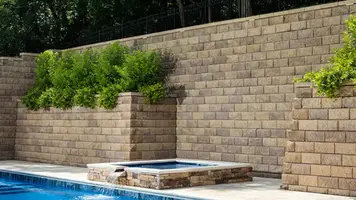
- Hardscape installation and retaining wall construction and repair.
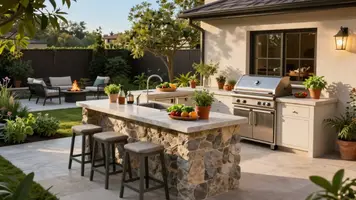
- Outdoor kitchen design, deck building, and landscape integration.
- Bobcat and excavation services to prepare the area and control drainage.
Talk to a Knoxville native-led team
After 25+ years, Anchored Construction explains tradeoffs between systems so many homeowners make an informed choice. Clear scheduling, transparent pricing, and skilled crews protect your investment and value home improvements per square and square foot.
Call (865) 316-6933 or email Info@anchoredconstructiontn.com to start the installation and site evaluation.
Conclusion
Deciding between systems comes down to how the area will perform for years, not just how it looks on day one.
Anchored Construction & Restoration helps many homeowners weigh budget, aesthetics, and durability so your investment makes sense for the property. Pavers often last longer because modular repairs are simple. A poured slab gives fast installation and good per square foot value when base and drainage are correct.
Consider color stability, likely crack points, and future repairs when choosing materials like natural stone, brick, decorative concrete, or concrete pavers. Proper base work and expert paver installation protect long-term value and reduce lifecycle repairs.
Call (865) 316-6933 or email Info@anchoredconstructiontn.com to schedule a site visit and receive a tailored proposal for your patio, driveway, or outdoor project.