Which paving option gives your Knoxville home the best mix of curb appeal and long‑term value?
Anchored Construction & Restoration helps homeowners answer that question with a clear, practical guide. After 25 years in East Tennessee, the team explains trade‑offs so your choice fits budget, style, and use.
This short comparison shows how each material is made and why that matters for durability, color, and weather resistance. You’ll learn where each option shines on a patio, driveway, or walkway.
Expect clear cost ranges, lifecycle tips, and installation priorities. The goal is simple: help you pick the right product for your project and maximize value for your home.
Key Takeaways
- This guide clarifies look, performance, and total value for common outdoor projects.
- Manufacturing differences affect durability and color consistency.
- Cost ranges and installed prices are summarized to aid budgeting.
- Maintenance, sealing, and repairability shape long‑term value.
- Proper base and precise installation matter most for lasting results.
Anchored Construction: Local Expertise You Can Trust for Paver Projects
Anchored Construction combines local soil knowledge with hands-on experience to deliver long‑lasting hardscape work for Knoxville homeowners.
About our Knoxville roots and 25+ years of hardscape experience
Founded in 2000 and led by Knoxville native Travis Bullington, the company brings over 25 years of residential and commercial experience. Travis graduated from South Doyle High School and The University of Tennessee. His love of the outdoors drives a commitment to quality craftsmanship across each project.
Services span hardscape installation, concrete services, decks, landscape work, outdoor kitchen design, and retaining wall repair. Anchored coordinates excavation, base prep, drainage, edge restraints, and finish details for reliable installation.
- Local crew that understands soils, rainfall, and freeze‑thaw patterns to protect your pavers.
- Design guidance that balances curb appeal and long‑term value for patios and driveways.
- Transparent estimates, clear timelines, and a single local contact for future maintenance.
Contact Anchored Construction
Call (865) 316-6933 or email Info@anchoredconstructiontn.com to discuss design options, schedule a site visit, and get a clear proposal. Anchored Construction helps homeowners choose the right materials and options for lasting results.
Concrete pavers vs brick pavers: what’s the real difference today?
Choosing the right hardscape starts with how each product is made and used. This section explains manufacturing, look, and where each option performs best.
Materials and manufacturing: cement-and-aggregate vs kiln-fired clay
Concrete pavers are molded from cement and aggregate, then cured to gain strength. They come in many sizes and forms, including interlocking and large-format slabs.
Brick pavers are shaped from clay and fired in a kiln. That process gives a classic, time-tested unit that is usually rectangular and limited in format.
How composition affects look, color range, and texture
Composition drives appearance. Cement-based units offer broad colors and finishes and can mimic natural stone. Clay-based units lean toward warm reds, browns, and pinks and deliver a rustic texture.
Functionality in real spaces: driveways, patios, walkways, and pool decks
On driveways, quality concrete pavers handle heavy loads and resist freeze/thaw and UV. For patios and walkways, clay units add charm but may require premium manufacture for high-traffic use.
Pool decks benefit from slightly textured surfaces for grip; many cement finishes are engineered for that need.
- Versatility: Cement products offer more shapes and patterns for modern designs.
- Classic look: Clay units deliver warm tones and a historic style.
- Maintenance: Rougher clay surfaces can trap dirt and snow; smoother cement finishes clean more easily.
- Local performance: Both work well in East Tennessee when the base is built right.
Cost comparison and value per square foot
Understanding local rates helps homeowners set a realistic budget for a driveway or patio project. Start with material-only prices, then add installation, site prep, and accessories to find the true costs.
Material-only ranges
Material costs for concrete pavers often run about $5–$10 per square foot. That figure covers units alone before any site work or edges are added.
Installed ranges
Installed rates typically sit around $8–$15 per square foot for concrete pavers and about $10–$20 per square foot for brick pavers. These per square prices reflect labor and basic prep.
Why brick can cost more
Clay units require longer firing and tighter installation tolerance. Slight size variation increases cuts and layout time, which raises labor and time on site.
- Budget tip: Larger-format concrete units can reduce labor and speed installation.
- Both materials allow easy repairs by replacing individual pieces, preserving long-term surface value.
- Site prep, drainage, and complex patterns drive the biggest swings in total cost per square foot.
Durability, lifespan, and climate performance
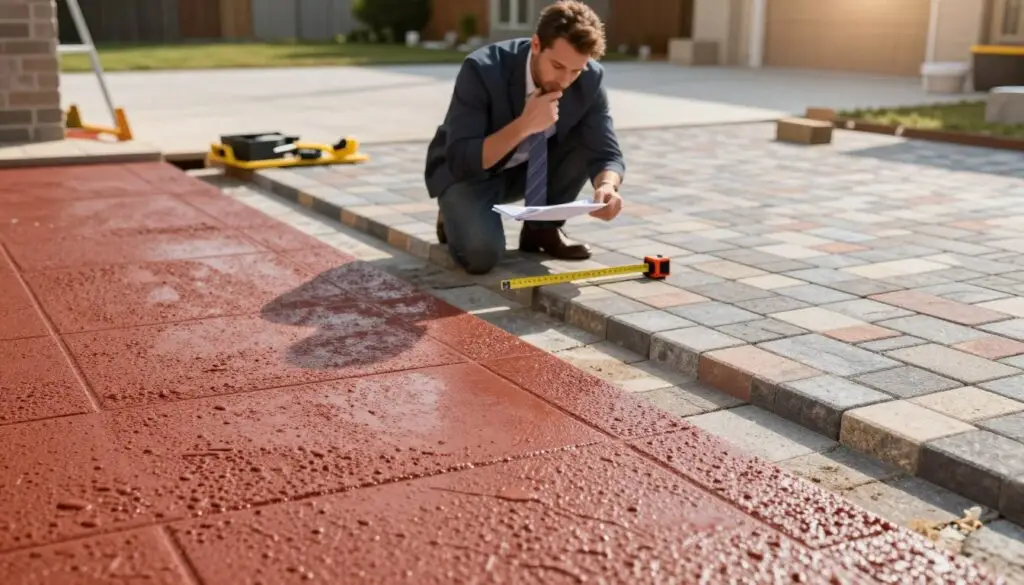
How a surface stands up to freeze‑thaw cycles, sun, and cars determines its service life. Durability starts with good materials and careful installation. Anchored Construction emphasizes both.
Freeze‑thaw, UV exposure, and heavy traffic considerations
In East Tennessee, drainage and edge restraint matter most. Proper slope and compacted base limit heaving and settlement.
UV and heat can fade colors over time. Dense, high‑quality units and periodic sealing preserve the surface look.
Strengths of concrete paver systems and brick’s long record
Properly specified concrete pavers resist wear, freeze‑thaw, and heavy loads. They are engineered for vehicle traffic and seasonal movement.
Brick pavers offer a time‑tested lifespan. Choose reputable clay units to avoid spalling or early flaking.
Quality control and common failure risks
- Most failures come from a weak base, not the unit itself.
- Manufacturer standards cut risks like crumbling and size variance.
- Seasonal inspections catch joint loss and settlement early, extending service time.
Maintenance, cleaning, and sealing schedules
Small, scheduled tasks make a big difference in how long a hardscape looks and performs. A basic plan keeps surfaces safe and lowers long-term cost.
Routine cleaning: soap-and-water vs pressure washing
Use warm water and a few drops of dish soap for routine maintenance. Scrub with a stiff broom, then rinse with a hose.
Low-pressure washing is acceptable for tougher grime. Take care not to wash out joint sand. If joints lose sand, reapply polymeric sand and compact it.
Sealing cadence: every three to five years
Seal every three to five years to limit stains and slow color fade. Sealing also repels water and simplifies cleanup after spills.
For clay units, choose a siloxane-based sealer. Avoid high-gloss products that can create uneven sheen on textured surfaces.
Joint stabilization and winter care
- Polymeric sand stabilizes joints, reduces weeds, and limits ant activity and washout.
- After deep cleaning, re-sweep sand and consider re-sealing joints to preserve joint integrity on slopes and high-traffic areas.
- In winter, use plastic shovels or rubber-edged blades and non-corrosive ice melt to protect the surface and edges.
Planning small, regular upkeep into your project avoids larger corrective work later. Anchored Construction recommends a simple yearly check and re-sand or reseal as needed to keep the surface performing well.
Installation overview: base prep, patterns, and labor
A successful installation starts long before the top layer goes down; it begins with precise layout and a compacted base. Anchored Construction & Restoration follows a clear sequence to protect the surface and extend service life.
Base essentials
Excavate to at least 12 inches. Add 8–12 inches of gravel in 2–4 inch lifts and compact each lift. Finish with about 1.5 inches of bedding sand and screed level for a true bedding plane.
Patterns and cuts
Choose patterns by function. Herringbone resists vehicle shear for a driveway. Running bond and basket weave suit patios and walkways. Interlocking shapes help distribute loads.
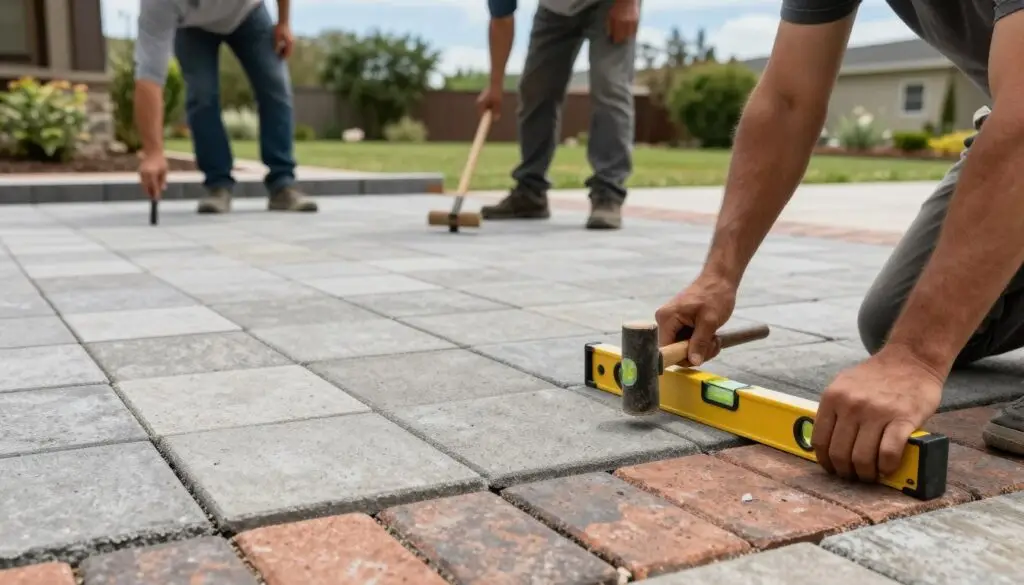
Use a wet saw with a diamond blade for neat edges. Set units with a mallet and maintain straight courses—especially with clay units that have slight size variance.
Time and labor
Proper installation saves time later. Larger-format concrete units cover ground faster and lower labor. Brick-style units can need extra time for alignment.
- Edge restraints—concrete, metal, or plastic—hold the field under traffic.
- Final compaction locks the field; sweeping polymeric sand into joints improves stability and reduces maintenance.
Design flexibility and when to choose concrete, brick, or stone
Design choices shape how an outdoor space feels and functions for years.
Color and shape options
Concrete pavers come in many shapes and textures. They offer modern smooth slabs, rustic finishes, and stone-like looks with broad color palettes.
Brick units favor rectangular shapes and warm, clay-driven tones. Their limited shapes deliver classic patterns with clear visual order.
Project fit: patios, driveways, pool decks, and garden paths
For a sleek, contemporary patio or a large driveway, options that come in larger formats speed installation and create clean lines.
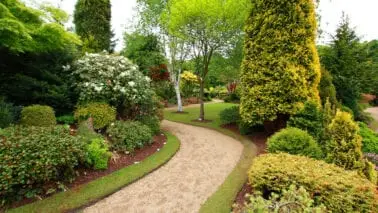
Pool decks benefit from slightly textured finishes to improve wet traction. Garden paths often rely on smaller units for tight curves and detail.
Considering stone pavers for premium, natural-style projects
Stone pavers provide unique color variation and a natural look that no manufactured unit can fully match.
They can raise project costs significantly; natural stone installations may reach up to $50 per square foot because of sourcing and on-site shaping.
- Design tip: Match colors to your home’s siding and trim for a cohesive look.
- Shapes matter: larger formats reduce seams, while small units allow intricate patterns like herringbone.
- Weigh your design goals against budget and maintenance to make the right choice for your home.
Conclusion
The right surface balances look, long-term performance, and realistic costs.
This guide outlined how material and manufacture—cement-and-aggregate units versus kiln-fired clay—affect durability and design choices for a driveway or patio.
Budget planning becomes clearer when you use typical installed ranges per square foot and factor in pattern complexity, time, and labor.
Durability depends as much on base preparation and drainage as on the paver itself. A well-built surface resists movement and saves repair costs over time.
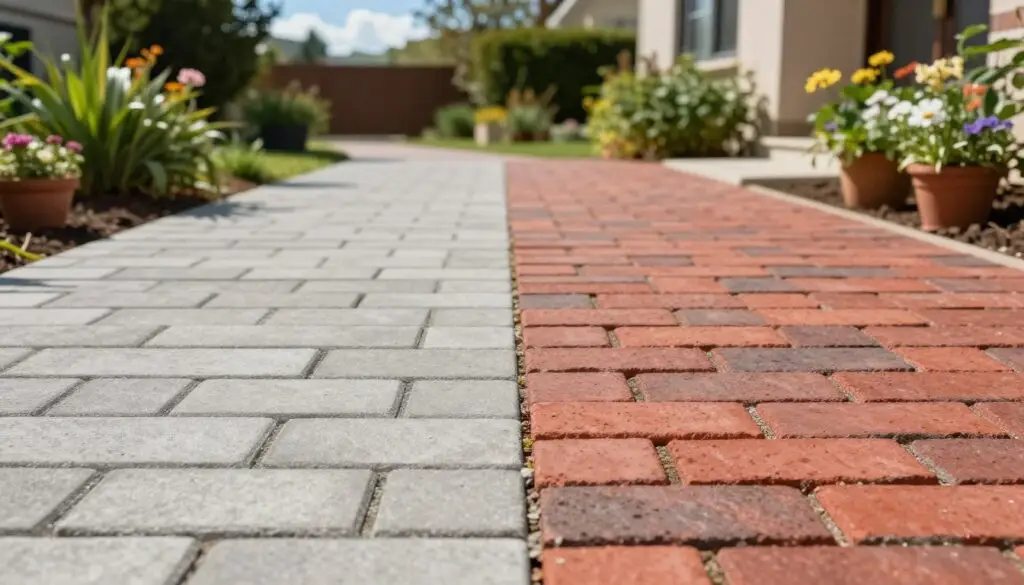
Concrete offers wide design latitude and textures. Brick brings warm, clay-driven color and classic charm. Both allow simple repairs by replacing a single unit.
Maintenance is straightforward: routine cleaning, joint re-sanding, and sealing every three to five years keeps value intact.
When you are ready to plan your project, Anchored Construction & Restoration helps finalize design, confirm materials, and deliver precise installation. Call (865) 316-6933 or email Info@anchoredconstructiontn.com for an estimate for your Knoxville-area project.