Curious which surface gives more value over time for your home and curb appeal? This guide answers that question with clear numbers and practical tips.
The upfront cost tells one story. An asphalt option often runs a bit lower at first, while a concrete choice can cost more up front but last longer. Anchored Construction & Restoration has served Knoxville and East Tennessee since 2000 and helps homeowners weigh these trade-offs.
We explain price ranges you can use to estimate your project. You will learn typical installed costs, cure times, and lifespan. We also cover maintenance, weather impacts in East Tennessee, and which factors drive final price.
Expect: a balanced A vs. B comparison to help you choose by budget, timeline, and appearance. For local estimates and site prep expertise, call (865) 316-6933 or email Info@anchoredconstructiontn.com.
Key Takeaways
- Upfront cost differs, but lifespan and upkeep shape long-term value.
- Installed cost ranges help you estimate your next project.
- Cure time affects when vehicles can return to the surface.
- East Tennessee heat and freeze cycles matter for performance.
- Anchored Construction offers local expertise to control cost and quality.
Quick Answer: Is concrete driveway cheaper than asphalt?
Quick context: homeowners often weigh short-term price against long-term value when choosing a paving material. Anchored Construction & Restoration helps Knoxville property owners balance early savings with decades of performance across East Tennessee sites.
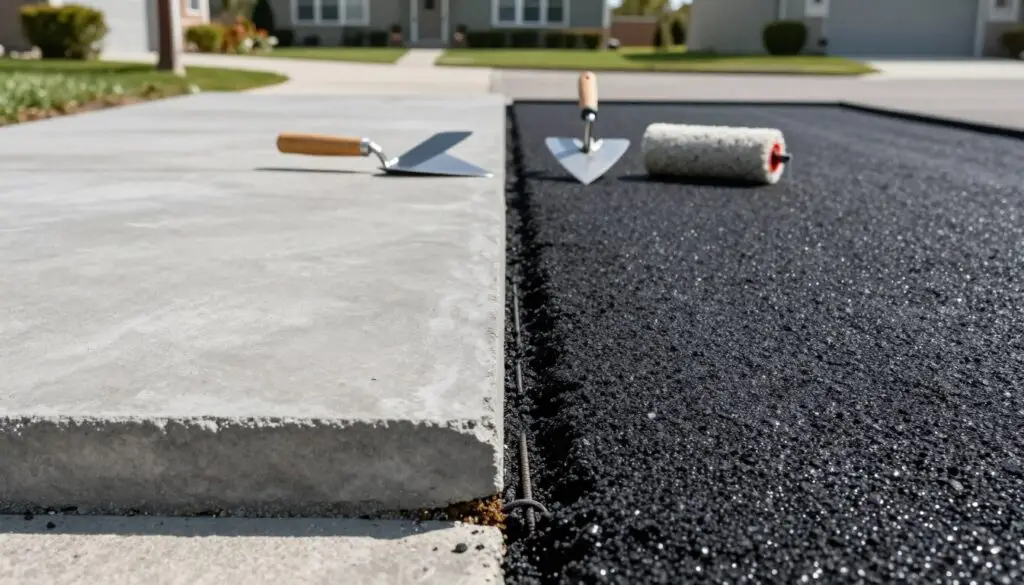
Short version: Asphalt typically costs less up front and can be driven on within 1–3 days. Concrete demands higher initial investment and 7–28 days to cure, but often lasts 30–40 years versus asphalt’s 15–20 years.
- Asphalt: lower initial price, ready for light use sooner.
- Concrete: higher per square foot cost, longer service life and fewer full replacements.
- Choose based on your budget, timeline, appearance goals, and how long you plan to keep the home.
Anchored Construction can review site slope, access, and local weather effects to set a realistic timeline and estimate for your project. That helps you compare cost per square foot and total ownership over time.
Cost Breakdown per Square Foot and Total Project Costs
Breaking down installed rates helps homeowners plan a realistic budget for their next paving project. Start with per square foot ranges to compare bids and spot add-ons that raise the final amount.
Average installed ranges
Typical installed ranges for most Knoxville properties run: asphalt $7–$15 and concrete $8–$20 per square foot. These figures include labor and basic materials. Average total spends often reflect driveway size and complexity.
What drives total price swings
- Labor: hard-to-access sites or deep excavation raise the per square rate.
- Base prep: quality compaction and drainage add upfront time but cut future repairs.
- Finish and mix: broom finish costs less; stamping or specialty mixes increase cost.
- Extras: rebar, heated systems, aprons, and permits change the total project amount.
Practical budgeting tips
- Plan using the installed ranges as a baseline.
- Ask for line-item pricing for labor, materials, and site prep.
- Anchored Construction’s crew handles excavation, base prep, and formwork in-house to control labor and materials.
Comparing an asphalt driveway and a concrete driveway on the same lot gives the clearest picture of true costs and long-term value. Anchored Construction evaluates subgrade, access, and reinforcement needs on-site for accurate estimates.
Installation Timeline, Curing, and Downtime for Your Driveway
A realistic timeline helps homeowners plan parking, access, and the installation sequence. Anchored Construction & Restoration coordinates excavation, base compaction, and pour timing to reduce disruption at your home.
How long before you can park
After placement, an asphalt surface supports light use in about 1–3 days. A concrete slab needs a longer cure window, typically 7–28 days before it safely holds vehicles.
Labor, excavation, and site prep in East Tennessee
Both options need quality base work. Anchored Construction provides bobcat excavation, compaction, and form setup to protect the subgrade.
- Expect similar prep time, but fewer days waiting to park with asphalt.
- Proper drainage and compaction prevent movement on varied Knoxville soils.
- Control joints, reinforcement, and pour sequencing limit shrinkage and cracking.
- Scheduling around weather windows shortens total project time.
Climate Performance: Heat, Freezing, and Weather in Knoxville
Seasonal heat and occasional cold snaps each stress paving materials in different ways. Anchored Construction & Restoration factors local climate when designing thickness, joints, and drainage for every project.
Hot summers vs. freezing snaps: which surface handles it better?
High heat can soften asphalt at the top layer, causing tacky spots or slight rutting on busy routes. By contrast, concrete keeps stiffness in extreme temperatures and resists surface deformation.
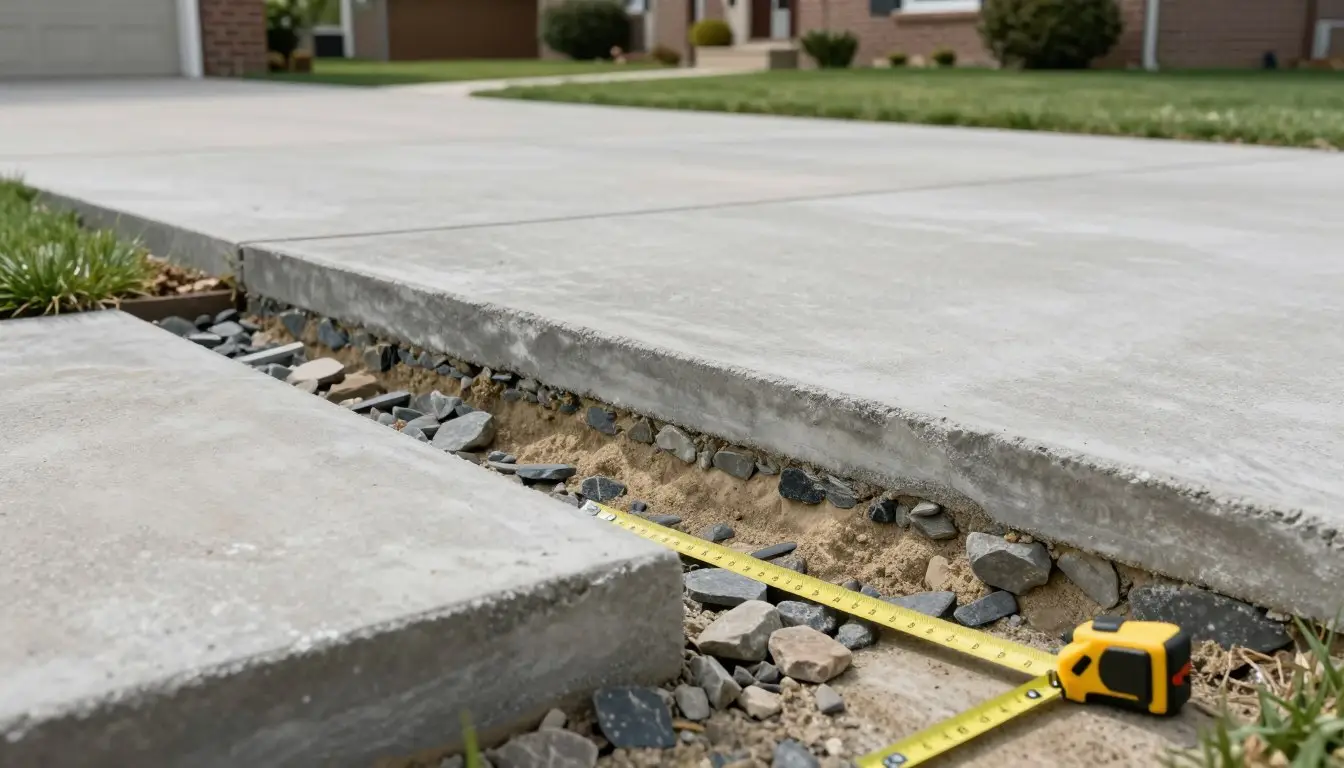
Freeze cycles create a different challenge. Water intrusion and repeated freezing can push concrete to crack unless joints and sealants are placed correctly. Proper drainage and sealing reduce this kind of damage.
- Knoxville heat may favor concrete for long-term stiffness.
- Winter water and freeze-thaw cycles stress slabs; jointing and sealing help.
- Shaded versus full-sun locations influence which surface performs best for your home.
- Redirecting gutter runoff and improving base compaction cut moisture issues on slopes.
Anchored Construction tailors mix, base depth, and compaction to East Tennessee climates. For most properties, a site-specific recommendation balances appearance, budget, and exposure to deliver the best long-term result.
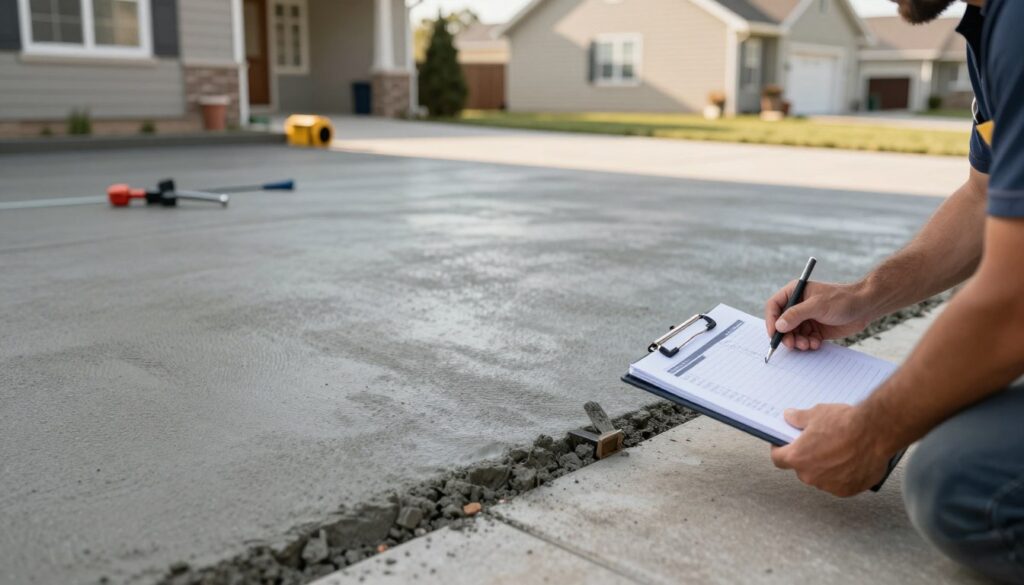
Maintenance, Repairs, and Lifespan: What You’ll Spend Over the Years
Routine care and timely fixes decide long-term performance more than the material alone. With proper maintenance planning, Anchored Construction & Restoration helps clients budget for resealing and timely fixes to extend service life and preserve curb appeal.
Resealing, crack fixing, and typical costs
Resealing for asphalt surfaces should occur every few years to slow moisture damage. Minor crack repairs run about $1–$3 per linear foot. Pothole patches cost roughly $2–$5 per square foot.
For concrete, periodic sealing protects finishes and reduces water penetration. Small repairs start near $3 per square foot. More extensive fixes can reach $25 per square foot depending on severity.
Expected life and total cost of ownership
Typical service life spans vary. Asphalt surfaces commonly last 15–20 years with good care. Concrete often lasts 30–40 years with proper maintenance.
- Plan for resealing and minor repairs every few years.
- Invest in base prep to cut future repair frequency.
- Balance upfront cost with long-term repair cycles and durability.
Anchored Construction advises the right maintenance cadence based on traffic and exposure. That guidance helps homeowners forecast costs and get the best value over the years.
Alternatives to Consider: Gravel and Pavers for Different Budgets
Gravel and pavers give homeowners flexible options for curb appeal and cost control. Each choice fits different needs for load, look, and upkeep.
Gravel pricing and upkeep
Gravel runs about $1–$3 per square foot and is often a DIY-friendly option. Expect routine regrading and topping every 1–3 years to manage ruts and erosion.
Good compaction and edge restraints reduce movement. Anchored Construction installs access drives, patios, and hardscapes with bobcat grading to extend life.
When pavers make sense
Pavers deliver high-end finishes and strong load capacity for heavy vehicles. Typical paver projects run $6,000–$18,000, while unit prices vary by stone type and permeability.
Site prep that cuts future work
- Strong sub-base and layer-by-layer compaction reduce settling for both gravel and paver surfaces.
- Permeable pavers help manage water on tight lots.
- Decorative borders upgrade finishes without rebuilding the whole surface.
Why Knoxville Homeowners Choose Anchored Construction
Anchored Construction brings decades of local know-how to every home project in Knoxville. The team blends practical design with full-service work to make sure each installation meets local site needs and homeowner goals.
Local expertise since 2000: services that cover the full scope
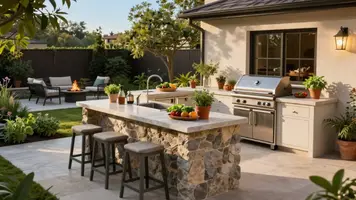
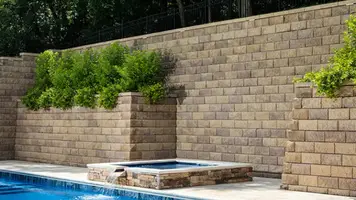
Founded in 2000 and led by Knoxville native Travis Bullington, Anchored Construction & Restoration handles concrete work, decks, landscape, outdoor kitchens, and hardscapes. They also provide retaining walls, warehouse repair, pallet racking, plus bobcat and excavation services.
Bring your ideas to life—contact the team
One crew does excavation, base prep, forming, and finishing. That creates smoother schedules and consistent quality. Thoughtful layouts improve appearance and drainage. Clear advice helps you weigh pros, materials, and choice for your home.
- Accurate estimates based on local soils and weather.
- Full-service work from prep through finish.
- Responsive scheduling and site protection.
Call (865) 316-6933 or email Info@anchoredconstructiontn.com to discuss timing and options.
Conclusion
Quick conclusion: Use this wrap-up to match budget, timeline, and long-term value for your next paving project.
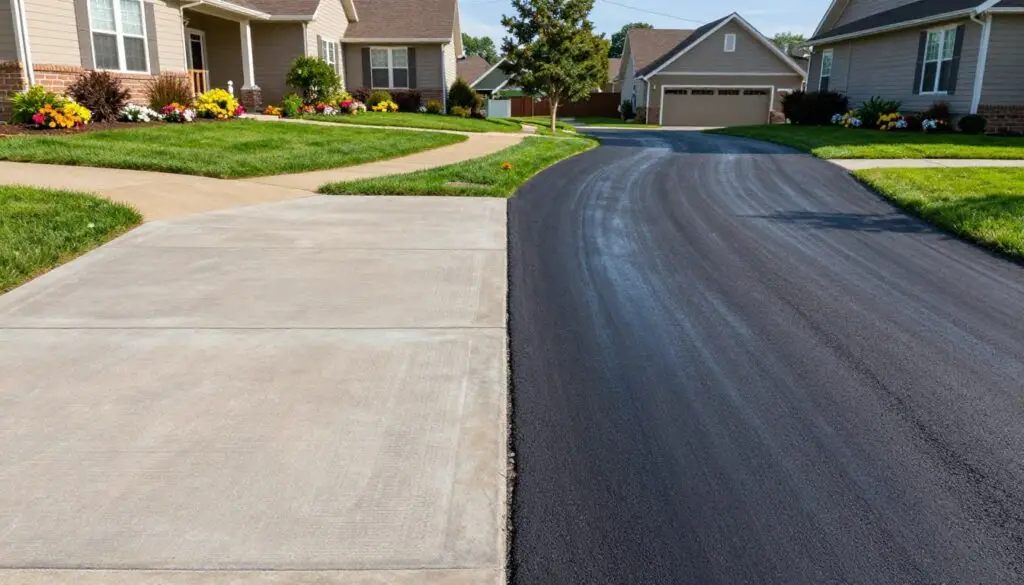
Asphalt often offers a lower price per square foot and lets you return to normal use in 1–3 days. A concrete option costs more up front per square foot and needs 7–28 days to cure but can last many years longer.
Total ownership costs come from installation, maintenance, and repairs over time. In Knoxville climates, good drainage, sealing, and jointing cut cracks and surface damage.
Choose by priorities: fastest installation, lowest immediate cost, or longest durability and best appearance. When you’re ready, Anchored Construction & Restoration will provide a detailed estimate, outline installation steps, and schedule work to minimize downtime. Call (865) 316-6933 or email Info@anchoredconstructiontn.com.
FAQ
Is a concrete driveway cheaper than asphalt up front?
Upfront material and installation costs for asphalt typically run lower per square foot. Asphalt often falls near the lower end of common installed price ranges. Concrete tends to cost more initially if you choose thicker slabs or decorative finishes. Local labor, base prep, and site access in East Tennessee also affect the final quote from Anchored Construction & Restoration.
How does upfront price compare to long-term value?
Asphalt is less expensive to install but requires more frequent upkeep like resealing and patching. A concrete surface costs more up front yet usually lasts longer with fewer repairs. When evaluating value, include maintenance cycles, expected lifespan, and potential curb appeal that affects resale.
What are typical installed costs per square foot for asphalt and concrete?
Installed asphalt commonly lands in a lower price band while concrete sits higher. Exact numbers vary by finish, thickness, and base work. Decorative finishes, stamped patterns, or colored overlays raise concrete pricing. Anchored Construction & Restoration can provide an on-site estimate reflecting local material and labor rates.
What drives project total costs beyond material price per square foot?
Major cost factors include excavation, base compaction, subgrade repairs, drainage work, driveway size and shape, and finish choices. Delivery distance, disposal of old material, and any required permits also add to totals. Proper base prep matters most for long-term performance in Knoxville’s soils and weather.
How long until a new driveway can be used?
Asphalt surfaces can be driven on within a few days after cooling and compaction. Concrete requires longer cure times—typically one week before light use, and up to 28 days to reach full strength for heavier loads, depending on mix and weather. Anchored Construction & Restoration follows manufacturer and engineer recommendations for safe use.
What installation steps add time and cost in East Tennessee?
Time and cost increase with extensive excavation, replacement of unstable subgrade, adding or improving drainage, and installing a properly compacted stone base. Seasonal conditions like heavy rain or extreme heat can also extend timelines and require adjustments to material handling.
Which surface handles Knoxville’s heat and freezing better?
Both materials perform with proper design. Asphalt handles freeze–thaw cycling by flexing, but it softens in extreme heat and may rut. Concrete resists rutting and stays cooler, yet can crack from frost heave or poor base. Correct thickness, jointing, and base prep tailored to local climate reduce risks for either option.
What maintenance should homeowners expect for each surface?
Asphalt benefits from regular resealing every few years, plus timely crack repairs and pothole patching. Concrete needs fewer routine treatments but requires prompt crack sealing and occasional joint maintenance. Cleaning and minor repairs keep both surfaces attractive and functional longer.
How long do asphalt and concrete driveways typically last?
With proper installation and maintenance, asphalt often lasts 15–30 years. Concrete commonly endures 30–40 years. Actual longevity depends on base quality, load patterns, climate stress, and preventative care.
How should homeowners think about total cost of ownership?
Compare initial install with expected maintenance costs and likely replacement timing. Asphalt has lower entry cost and higher maintenance frequency. Concrete costs more now but can lower long-term repair spending. Consider projected budgets, desired appearance, and planned property use when choosing.
Are gravel or pavers viable alternatives for different budgets?
Gravel is the lowest-cost option per square foot and remains permeable, but it needs frequent grading and topping. Pavers cost more but offer high curb appeal, easy localized repairs, and strong load capacity. Site prep and compaction are critical for both to prevent settling and reduce future maintenance.
How much does gravel cost and what upkeep does it need?
Gravel costs vary widely but often sits well below hard surfaces per square foot. Expect periodic raking, infill, and weed control. Without proper edge restraint and compaction, gravel may migrate and require frequent replenishment.
When do pavers make sense for a driveway project?
Choose pavers for enhanced style, distinct patterns, and easier repair of localized damage. They perform well under heavy loads if the base is engineered correctly. Pavers also offer good drainage when installed with joint sand and appropriate edge restraints.
Why do Knoxville homeowners pick Anchored Construction & Restoration?
Anchored Construction & Restoration brings local experience in excavation, hardscapes, and pavement systems tailored to East Tennessee conditions. The team provides practical guidance on materials, finishes, and maintenance to help homeowners make informed choices. Contact (865) 316-6933 or Info@anchoredconstructiontn.com to discuss site-specific options.