Which surface gives the best long-term value for a backyard patio or driveway? This question guides many homeowners and shapes smart project choices.
Anchored Construction brings 25+ years of East Tennessee experience to help you weigh options. Founded in 2000 and led by Knoxville native Travis Bullington, the team blends construction and landscaping know-how to guide homeowners.
National averages show installed concrete around $4–$15 per square foot, while installed pavers range about $10–$30 per square foot. Labor typically represents 40–60% of concrete installation and 60–70% for pavers. Decorative stamped surfaces can bring entry-level pavers into a similar price band.
This introduction frames what matters: initial price, installation time, and long-term value. You will learn how design choices, site conditions, and repair needs shape final costs and schedules. Ready to plan a project? Contact Anchored Construction at (865) 316-6933 or Info@anchoredconstructiontn.com for a tailored estimate.
Key Takeaways
- Expect a wide price range per square foot based on materials and design.
- Labor intensity raises installed price and affects timelines.
- Stamped surfaces can narrow the price gap between options.
- Long-term maintenance influences overall ownership value.
- Anchored Construction offers local guidance and tailored estimates.
Anchored Construction: Knoxville’s trusted team for concrete and paver projects
Anchored Construction brings local know‑how to every driveway, patio, and outdoor living project in Knoxville. Founded in 2000 and led by Travis Bullington, the company blends field experience with homeowner-focused planning.
The team serves East Tennessee with deck building, landscape services, outdoor kitchen design, hardscape installation, retaining wall work, warehouse repairs, pallet racking, and excavation. They handle both poured concrete and paver installation with crews that adapt to soils, slopes, and drainage realities.
What homeowners can expect:
- Start-to-finish management of design, budgeting, and installation with clear timelines.
- Excavation and site prep that protect the finished surface and reduce surprises.
- Repair and maintenance planning so your investment keeps long-term value.
- Plain‑spoken guidance on design options, whether a new concrete slab patio or full paver installation.
Commercial and residential clients get the same warranty-minded care. Call (865) 316-6933 or email Info@anchoredconstructiontn.com to schedule a site visit and get a tailored plan for your project.
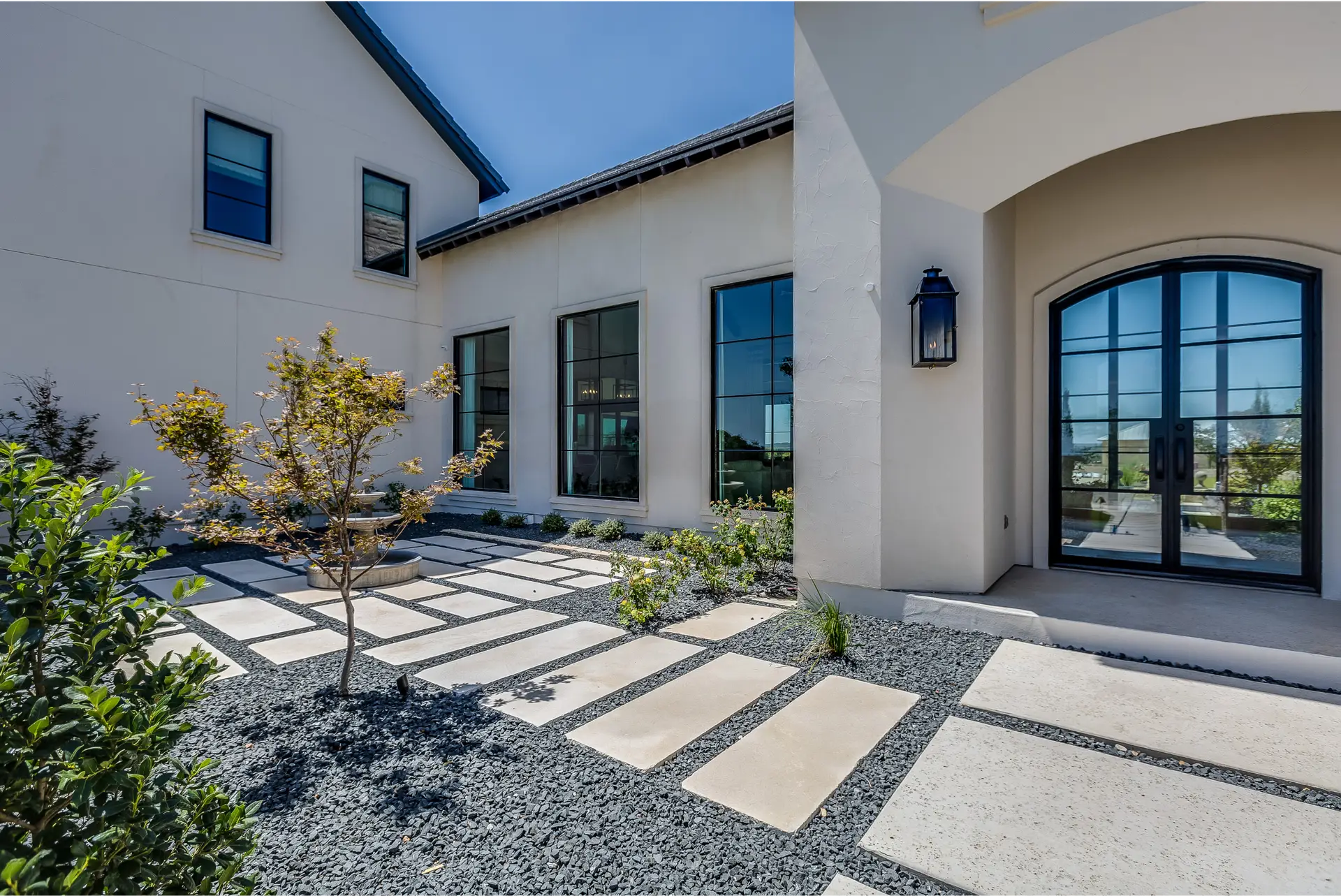
Concrete vs pavers cost: what homeowners should expect in the present market
Homeowners often start budgets by asking how much a new driveway or patio will run per square foot today. National installed ranges in 2025 give a useful planning baseline: basic gray runs about $4–$15 per square foot, while segmented paving materials more commonly fall between $10–$30 per square foot.
Typical installed cost per square foot
Use national averages, then adjust for Knoxville labor and access. A 576 square foot driveway illustrates the math: small unit differences add up fast. Labor share is higher for interlocking systems, which raises installed price but gives pattern precision.
When stamped concrete overlaps entry-level pavers
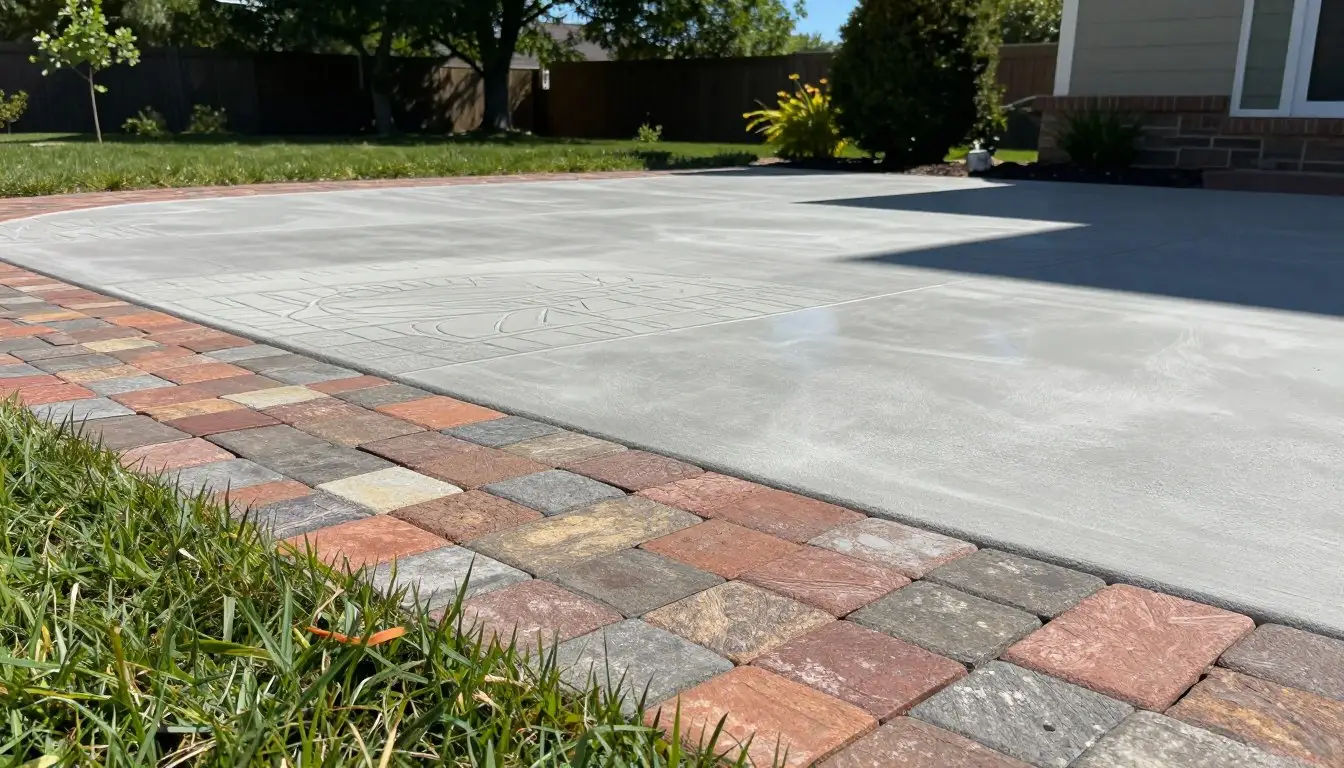
Stamped finishes at $12–$18 per square foot can fall into the same range as entry‑level concrete pavers at $10–$20 per square foot. That narrows the visual upgrade gap and can influence value decisions.
How budget, timeline, and design goals shape the final price
- Plan materials and installation together.
- Factor curing time for poured slabs versus immediate use for paver surfaces.
- Include a contingency for site surprises and localized estimates from Anchored Construction.
Price by project type: driveway, patio, walkway, and outdoor living areas
Square footage and design choices are the biggest factors that shape project pricing. Larger areas drive totals quickly because a small change per square foot multiplies over hundreds of feet.
Driveway examples and per-square-foot ranges
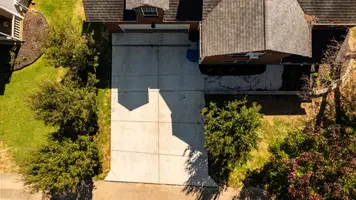
A two-car driveway (24′ x 24′, 576 sq ft) shows how numbers add up. Basic gray runs roughly $2,304–$4,608. Colored finishes sit near $3,456–$6,912. Stamped finishes climb to about $6,912–$10,368.
Patios and outdoor kitchen surfaces
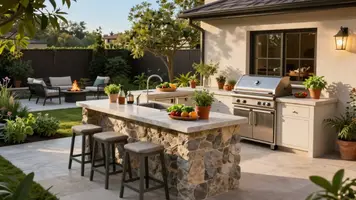
Patios follow similar bands. A paver surface can elevate an outdoor kitchen. Stamped concrete gives a lower-price visual upgrade while still keeping budgets predictable.
Walkways, curves, and pattern premiums
Curves, borders, and inlays add 15–30% to labor. Walkways need more cuts and precision, which raises installation time. Standardizing materials across driveway, patio, and paths often saves money and improves curb appeal.
- Budget tip: prioritize vehicle areas for thicker bases and tougher materials.
- Design tip: choose shared materials to reduce waste and labor.
- Ask for a breakdown: materials, labor, and finish options itemized.
What drives your final costs per square foot
Your project’s true per square foot price usually starts under the ground, not at the surface. Site prep and base work set long-term performance and often represent the largest single variable in any estimate.
Site prep, excavation depth, base materials, and drainage
Typical excavation for some surfaces runs 6–8″ while interlocking systems may need 8–14″ removed. Base layers commonly include 4″ to 12″ of compacted gravel plus 1–3″ bedding sand for segmented units.
Layout complexity: curves, borders, and inlays
Curves and detailed borders increase cutting and alignment time. That raises installation labor and raises the price per square foot.
Material grade and strength
Higher PSI mixes and thicker vehicle-rated units boost durability but add material price. Choose strength where traffic demands it and save where it’s not needed.
Hidden fees and site conditions
- Permits: $50–$250 typical.
- Removal: $2–$6 per square foot for old surfaces.
- Drainage and grading: French drains or catch basins can add $1,500–$5,000.
- Disposal: $300–$1,800 depending on scope.
Ask Anchored Construction for an itemized proposal. A clear breakdown aligns budget, installation, and long-term performance goals.
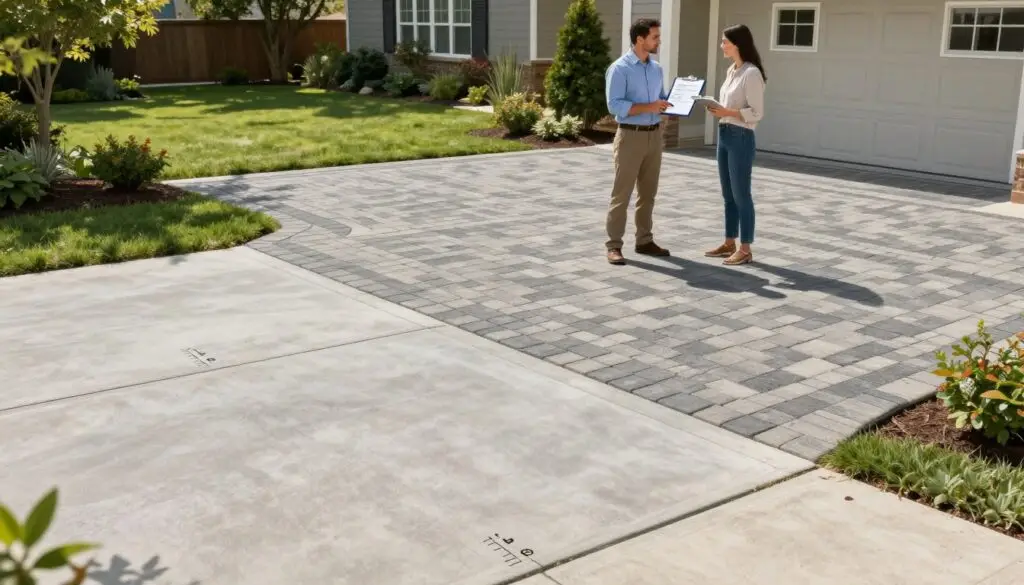
Installation process and labor: poured concrete slab vs paver installation
Installation timing and crew choices shape how quickly your driveway or patio returns to normal use.
Crew size and equipment. A typical poured concrete project uses a 3–5 person crew with excavation gear, forms, a concrete truck, and finishing tools. A standard paver installation often runs 3–6 people with excavators, compactors, and cutting tools.
Crew, tools, and timeline differences
Poured concrete is placed as a single slab. That shortens the on-site placement window to 3–5 days. Plan for curing after placement. Full strength can take 7–28 days before heavy use.
Paver installation is piece-by-piece. Expect 5–10 days for a typical driveway. The surface is ready for use immediately after installation.
Curing time versus immediate use
Curing adds downtime for poured concrete. That affects deliveries and vehicle access. Paver projects reduce disruption for homes with tight street parking.
Why labor is a larger share of paver work
- Hand placement, cutting, and patterning increase labor hours.
- Alignment and borders require skilled installers for long-term performance.
- Weather sensitivity: poured concrete needs narrow weather windows, while paver work is more flexible.
Anchored Construction schedules prep, base, installation, and cleanup in phases and provides daily updates. Ask about weather contingencies and how they affect time and costs before work begins.
Design options and curb appeal that influence value
Matching material, color, and pattern to your home makes the whole property feel intentional. Thoughtful design choices lift curb appeal and support resale value.
Finishes that change the look
Finishes range from simple broom textures to exposed aggregate and stained surfaces. Stamped concrete can mimic stone or brick and often sits in a mid-range price band for driveways and patios.
Material choices for style and longevity
Homeowners choose from concrete pavers, brick, natural stone, and porcelain. Each option has a distinct look and service life. Natural stone gives a premium aesthetic. Brick offers classic charm. Concrete pavers balance flexibility and budget control.
Patterns, borders, and colorways
Herringbone, basketweave, and running bond add visual interest. Complex patterns and multiple borders raise labor time but increase appeal.
- Design options: use contrasting colors for edges to guide steps and drive lines.
- Patterns: choose timeless layouts to protect long-term value.
- Materials: sample mockups confirm final colors and textures on site.
Anchored Construction helps balance ambition and budget. Their team recommends materials and patterns that deliver the strongest return while keeping the look true to your home.
Maintenance, repairs, and long-term ownership costs
Consistent care and timely repairs determine a surface’s real lifetime value. A short plan keeps appearance, safety, and performance on track. Anchored Construction recommends simple schedules that fit your use and climate.
Sealing cadence and cleaning
Sealing: Typical sealing for poured slabs runs $0.50–$2.50 per square foot every 2–5 years. Paver sealing is often $0.75–$3.00 per square foot every 3–5 years.
Power washing costs $100–$300 and should precede sealing. Clean surfaces ensure sealants bond and look even.
Crack repair vs individual unit replacement
Crack filling on slabs can run $8–$15 per linear foot. Larger slab damage may need resurfacing at $3–$7 per square foot.
Segmented units allow lifting and replacing single pieces. That limits repair scope and can lower long-term costs for high-traffic areas.
Total ownership over decades
- Plan routine maintenance to protect color and texture.
- Compare proactive care versus deferred repairs for true lifetime costs.
- Avoid harsh deicing salts on slab surfaces; properly installed segmented systems tolerate salts better.
- Anchored Construction provides schedules and estimates to help you budget annual upkeep.
Durability, performance, and climate considerations
Durability matters most when a surface faces traffic, weather, and seasonal freezes. Anchored Construction plans installations to balance strength and movement for long service life.
Strength and flexibility
Strength and flexibility: PSI and interlocking systems
Residential mixes commonly use 3,500–4,000 PSI for slabs. Interlocking units often rate 8,000–12,000 PSI. Slabs rely on compressive strength and rebar. Segmented systems rely on interlock, a compacted base, and solid edge restraint.
Interlocking units provide more flexibility. They move with minor ground shifts and reduce large crack risk. Match stone and unit thickness to expected loads for the best results on a driveway.
Freeze-thaw, salts, and drainage
Freeze-thaw, salts, and drainage: protecting your investment
Proper base depth and drainage are critical to resist freeze-thaw cycles. Poor drainage shortens life for any surface. Deicing salts can scale untreated slabs; air-entrained mixes and good sealing limit damage.
- Driveway areas need a thicker base for loads and turning forces.
- Choose materials and thickness to fit local soils and traffic.
- Routine maintenance, timely repairs, and joint care preserve durability.
Concrete vs pavers: timeline, disruption, and project logistics
A clear timeline and staging plan keep a driveway project organized and reduce homeowner disruption. Anchored Construction lays out sequencing, delivery windows, and protection steps so you know what to expect.
Access, staging, and weather windows
Map access before work begins. Driveway closures affect parking and deliveries. For busy homes, a segmented paver installation often allows immediate return to service. A poured concrete slab needs curing time before heavy use.
- Staging: designate laydown areas to protect lawns and existing hardscape.
- Weather: rain or extreme heat can delay concrete placement and finishing.
- Deliveries: coordinate aggregates, forms, and pallet drops to streamline the installation process.
- Noise & vibration: expect excavation activity; daily updates limit surprises.
- Unexpected conditions: soft subgrades or buried debris may add time and affect costs; ask how these will be handled.
Anchored Construction provides a step-by-step schedule with milestones. Confirm the sequence, inspection points, and cleanup so the project finishes on time and meets your expectations.
Why Knoxville homeowners choose Anchored Construction
Anchored Construction combines hands-on trade skill with regional knowledge to shape lasting outdoor spaces. The team handles design and build work across decks, hardscapes, retaining walls, and outdoor kitchens. Travis Bullington leads the crew with local experience and clear communication.
Decks, hardscapes, retaining walls, concrete, and outdoor kitchens
Full service: Anchored Construction manages layouts, excavation, and installation. Their equipment keeps site prep on schedule. Driveway and patio upgrades are coordinated so finishes match and performance lasts.
From design to build: local expertise, transparent pricing, and repairs
The team provides itemized proposals with material and labor details. That transparency helps you compare solutions before committing. They also offer repairs and routine maintenance to protect long-term value and curb appeal.
- Local expertise for soils, grades, and water management.
- End-to-end project management from layout to final sealing.
- Durable solutions—poured concrete or concrete paver systems—matched to load and budget.
- Transparent pricing, documented options, and repair services.
Residential and commercial clients trust Anchored Construction for reliable installation and lasting appeal. Call (865) 316-6933 or email Info@anchoredconstructiontn.com to plan your driveway, patio, or full outdoor living project.
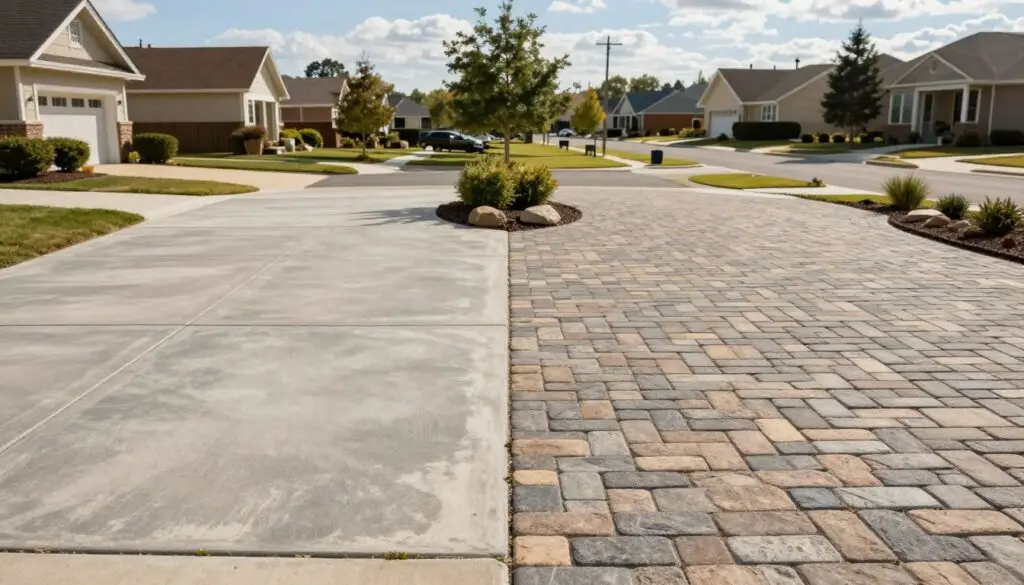
Conclusion
Deciding on the right surface means weighing short-term price against years of performance.
Generally, poured options often give a lower initial per square foot price, while segmented units add design flexibility and immediate use. Stamped finishes can bridge the look and the price for many homes.
Key takeaways: compare total costs, not just unit price. Factor in installation, base work, and routine maintenance. Match design options to your budget and desired curb appeal to boost resale value.
Anchored Construction has helped Knoxville homeowners make smart, long-lasting choices for 25+ years. For an itemized proposal and tailored square foot allowance, call (865) 316-6933 or email Info@anchoredconstructiontn.com.